
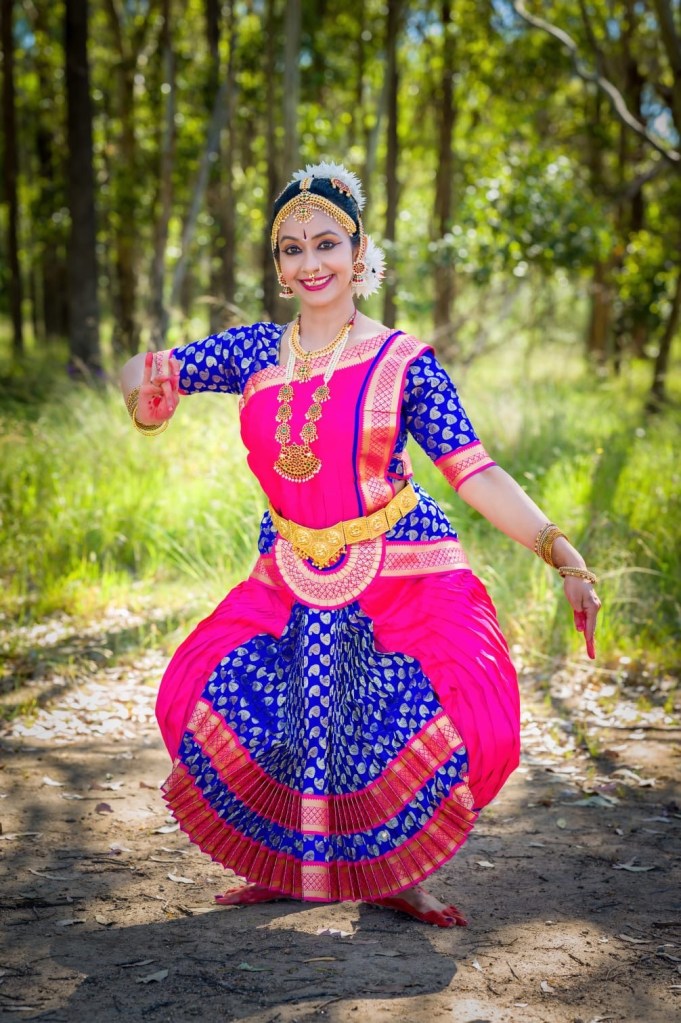
Meet the incredibly talented and inspiring Indian Classical Dancer & Entrepreneur Pallavi Bhagavath, whose passion for dance and dedication to her craft have made her a remarkable figure in her community. As the owner of the thriving Natyokthi dance school (https://natyokthi.com), she not only teaches the art of movement but also instills confidence and creativity in each of her students. Her journey as both a dancer and businesswoman reflects her resilience, as she has overcome challenges and pursued her dreams with unwavering commitment. Through her school, she creates a nurturing environment where dancers of all ages can learn, express themselves, and grow. Her energy and love for dance are contagious, inspiring those around her to reach their fullest potential, both on and off the stage.
Here is an interview with her:
Who or what inspired you to pursue a career in dance, and start your own dance school?
From a very young age, dance became an inseparable part of my life. At just 3 years old, I would make everyone sit around me while I danced for hours, captivating their attention. As I grew, it became clear to everyone around me that dance and I were inseparable. My father frequently spoke of Dr. Padma Subrahmanyam and her body of work, which deepened my passion for classical dance and inspired me to pursue it even further.
What impact do you hope your dance school has on your students, both in terms of dance and personal growth?
Thank you for this question. There’s often a misconception that only those who “can dance” should learn dance. Dancing gracefully is one aspect, and performance is just a part of what dance encompasses. Historically, dance, music, and yoga were integral to the 64 subjects taught in Gurukul, aiming for holistic development.
At Natyokthi, we emphasize teaching both the practical and theoretical foundations, helping students understand the science behind the art form. This deeper knowledge often inspires them, fostering a sense of appreciation for what they learn. Each level of learning is evaluated by a UGC-recognized board from India, which validates their progress and encourages them to pursue their studies with confidence.
Through Nrutha, we align the body, and through Nrutya, we align the mind and emotions. With higher aspects of learning, students learn tuning their energy which not only refines their dance skills but also equips them with life tools, such as:
Physical benefits: Agility, strength, and bodily awareness
Mental growth: Developing emotional intelligence and focus
Energetic alignment: Understanding teamwork, motivation, and a sense of belonging in the universe, all while gaining clarity and fulfillment in life.
This holistic approach nurtures personal growth that extends beyond dance into every aspect of life.

Where do you see yourself ten years from now?
In ten years, I don’t have specific tangible milestones, but my vision is clear. I see myself nurturing my students not only into skilled teachers, but more importantly, into compassionate and holistic individuals who will contribute meaningfully to society with an inclusive outlook.
One of my concerns is the dilution of classical art forms like Bharatanatyam, music, and yoga. Today, with so much accessible online, anyone can copy from YouTube or piece together information from the internet and claim expertise, passing on incomplete knowledge to the next generation. This is a frightening prospect.
To ensure that students in Australia and New Zealand receive a structured, validated education in these art forms, Natyokthi has become a center for the Sanchari Kala Parishad, a UGC-recognized board from India. We conduct exams and provide certifications for students pursuing dance, music, and other Indian fine arts.
As the Maha pracharak or head of this exam center for Australia and New Zealand my goal is to reach as many students as possible through their teachers, encouraging them to take up these exams. This not only validates their learning but also ensures that they receive the full benefits and understanding of these rich cultural art forms.
What advice would you give to aspiring dancers who are looking to pursue dance as a profession?
My advice to aspiring dancers is to learn your craft thoroughly and focus on mastering the basics. It’s important to pursue formal exams and certifications so that your learning holds value and can be recognized.
Beyond technique, dance is about understanding its deeper nuances. Observe, listen, and feel the art—there is much more to it than simply moving from one position to another. Pass on the knowledge with passion and dedication.
As the shloka says:
आचार्यात् पादमादत्ते
पादं शिष्यः स्वमेधया ।
पादं सब्रह्मचारिभ्यः
पादं कालक्रमेण च ॥
You gain:
● 1/4 of your knowledge from your guru,
● 1/4 through your own practice and intelligence,
● 1/4 from fellow dancers, books, and observation,
● And the final 1/4 over time through life’s experiences and evolving.
Practically speaking, I hope society continues to appreciate the value of fine arts, allowing students to pursue dance as a professional path—whether as teachers, performers, or both.
Be organized and creative. Even the Natya Shastraemphasizes the need to be skilled in various aspects, from stage management to handling finances. With that balance of artistry and practical skills, you can truly excel.

 Business With Balance