At BWB, we don’t just offer coaching, we create transformation. We are a modern ecosystem for ambitious women ready to rise in both life and business, with clarity, confidence, and true balance.
Our approach blends psychology, neuroscience, and cutting-edge strategy to unlock deep, lasting change. Through our life coaching, we help you rewire limiting beliefs, elevate your mindset, and cultivate unshakable confidence, so you can build success without sacrificing your wellbeing. Ambition and wellbeing were never meant to be in conflict. When you are grounded in your sense of self, supported in your mental health, and clear in your purpose, there is no limit to what you can achieve. ‘Be empowered to balance ambition with wellbeing’ is the heart of everything we do, a gentle but powerful reminder that you deserve both success and peace, both growth and rest, both a thriving career and a fulfilling life.
Our business coaching delivers more than strategy, it delivers aligned momentum. From branding and positioning to high-impact marketing and social media growth, we equip you with the tools, insights, and direction to build a business that not only stands out, but supports the life you truly want to live.
What truly sets us apart is our community. We bring together driven, like-minded women in a space designed for connection, collaboration, and support. Through curated events, immersive workshops, and powerful networking experiences, we create opportunities that expand not just your network, but your perspective and possibilities.
This is where ambition meets alignment. This is where success meets wellbeing. This is where you rise, with balance.
There was a time in my life when success felt hollow; like something I could achieve, but never truly feel. As a teenager, I struggled with anorexia. What appeared disciplined on the outside was, in truth, a battle within. Years later, in the fast-paced world of an IT career in Singapore, that same pattern evolved into chronic stress and eventual burnout. I was high achieving, but I wasn’t aligned. I was moving forward, but I felt disconnected; from myself, from my purpose, and from any real sense of wellbeing.
Those experiences became the catalyst for everything that BWB stands for today. I realised that so many women are navigating a similar internal conflict; ambitious, capable, driven, yet quietly struggling to reconcile who they are with who they feel they should be. We are often taught how to build careers, but not how to build ourselves. And without that foundation, success can feel hollow.
This is why I started BWB. Not just to help women grow professionally, but to guide them in rediscovering their identity, personally and in business. BWB was created from lived experience, from resilience, and from a deep belief that ambition and wellbeing are not opposing forces. I envisioned it as far more than a coaching platform; I envisioned it as a true ecosystem. A space where strategy and psychology intersect, where neuroscience shapes mindset, and where every woman who becomes part of it gains not only the tools to grow her business, but also a deeper, more authentic understanding of herself.
What has moved me most on this journey is the community that has grown around that vision. Women from every industry, every background, every stage of their story (and the men supporting them) coming together not just to network, but to genuinely connect, collaborate, and lift one another. There is nothing quite like witnessing a woman step into her power, often for the very first time, surrounded by others who understand exactly what that took.
When I started BWB which includes Women In Business (a platform run jointly with She Magazine), we were a small, passionate group with a shared belief and a big vision. Today, that vision has grown into something I could not have fully imagined at the beginning. We are now a huge community – members, collaborators, mentors, and supporters – united by the same conviction that women deserve both success and balance. That shift, from a small circle to a growing ecosystem with real backing, tells me something important: this idea was always bigger than just us.
I share all of this not to measure success in numbers, but because every new member, every partnership, every woman who finds her footing within this community represents something profound; proof that when you build something with genuine purpose, people show up. And they bring others with them. I am deeply, sincerely proud of how far we have come, and even more excited about where we are going.
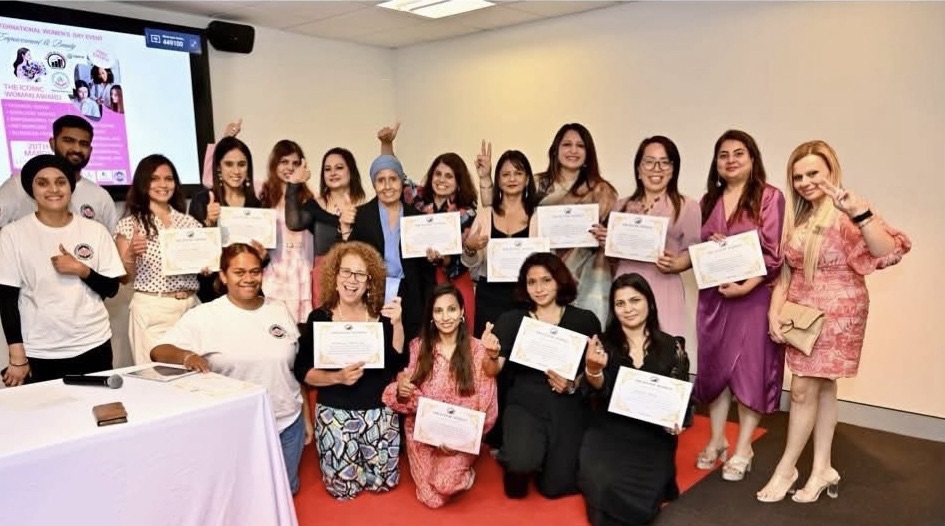
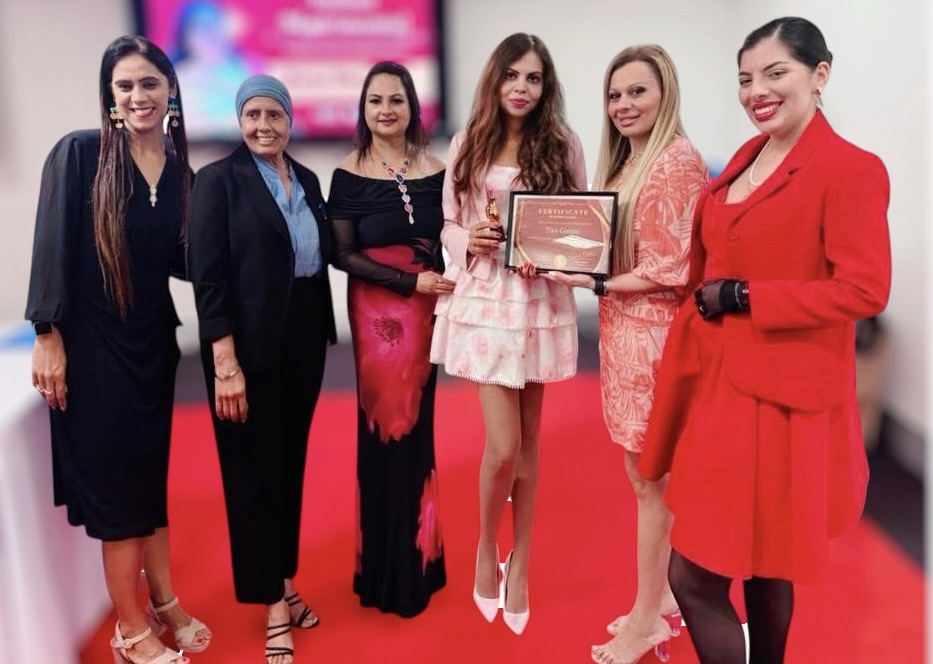
Recognising and celebrating the achievements of our members is a core part of our community culture. Each year, we honour outstanding members and community leaders who have demonstrated excellence, resilience, growth, and impact in their personal and professional journeys. Through our awards and recognition initiatives, we shine a spotlight on those who embody our values of ambition with balance, creating a platform where their stories inspire others to dream bigger and pursue their goals with confidence.
These annual recognitions are more than just awards; they are a celebration of progress, courage, and community. By acknowledging our members’ accomplishments, we foster a supportive environment where success is shared and uplifted collectively. Whether it’s through business achievements, personal transformation, or contributions to the community, we ensure that every milestone is valued and celebrated.
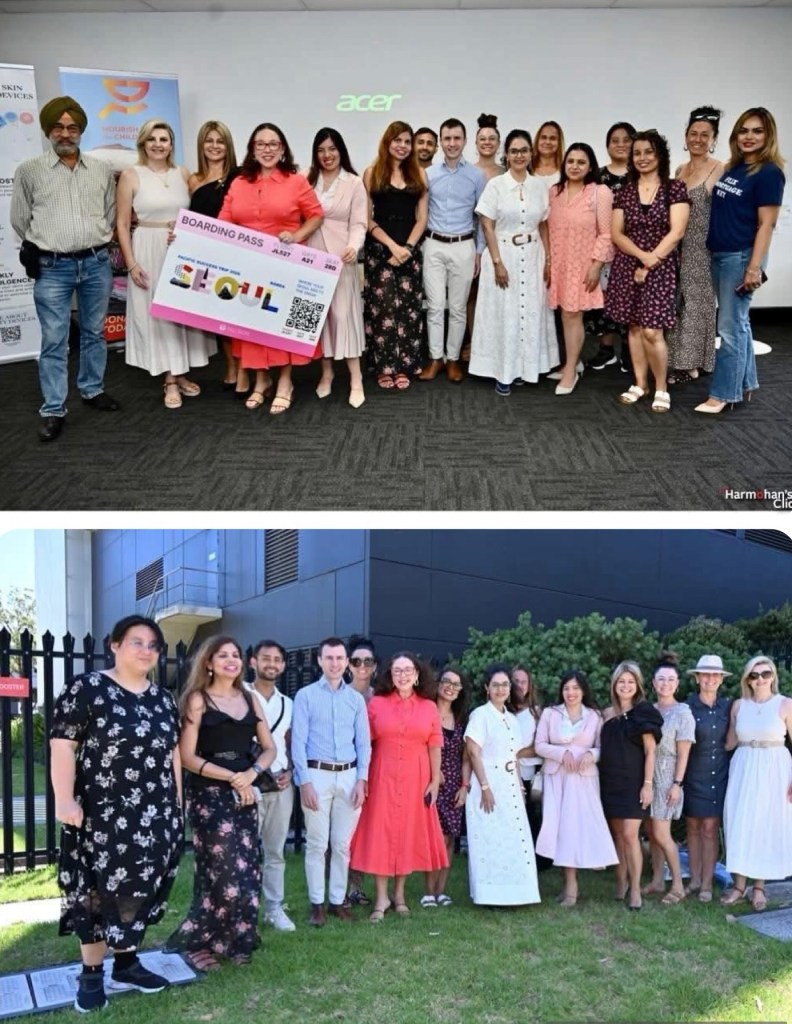
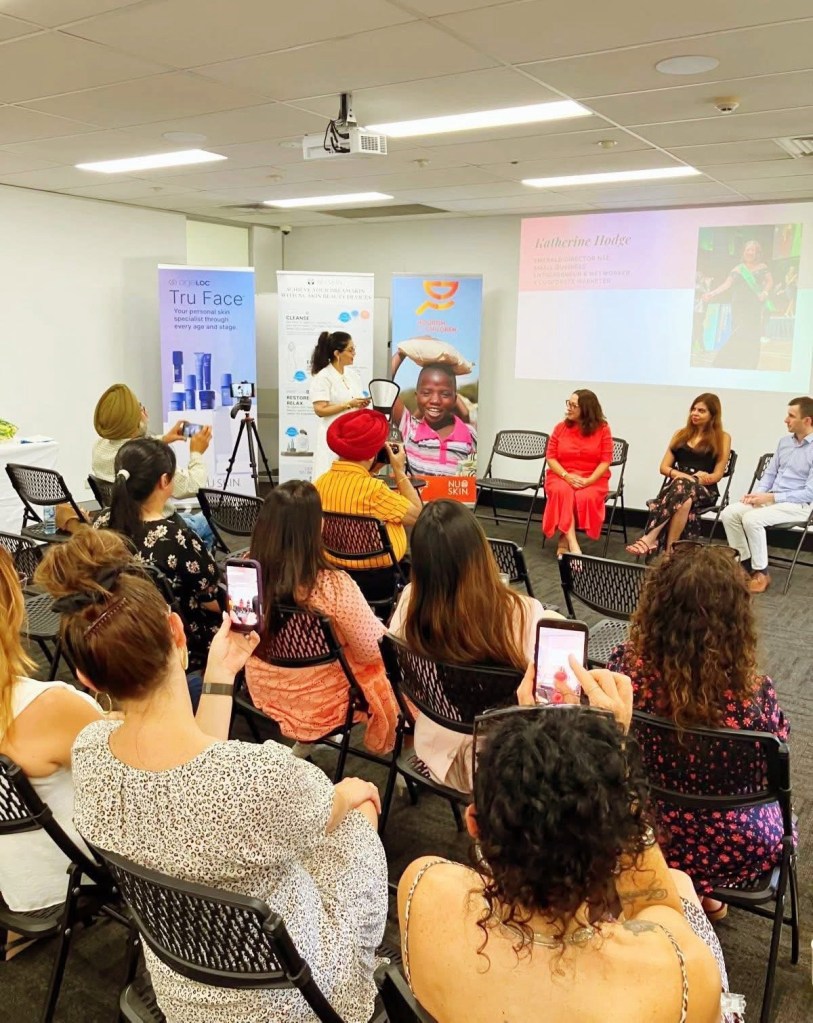
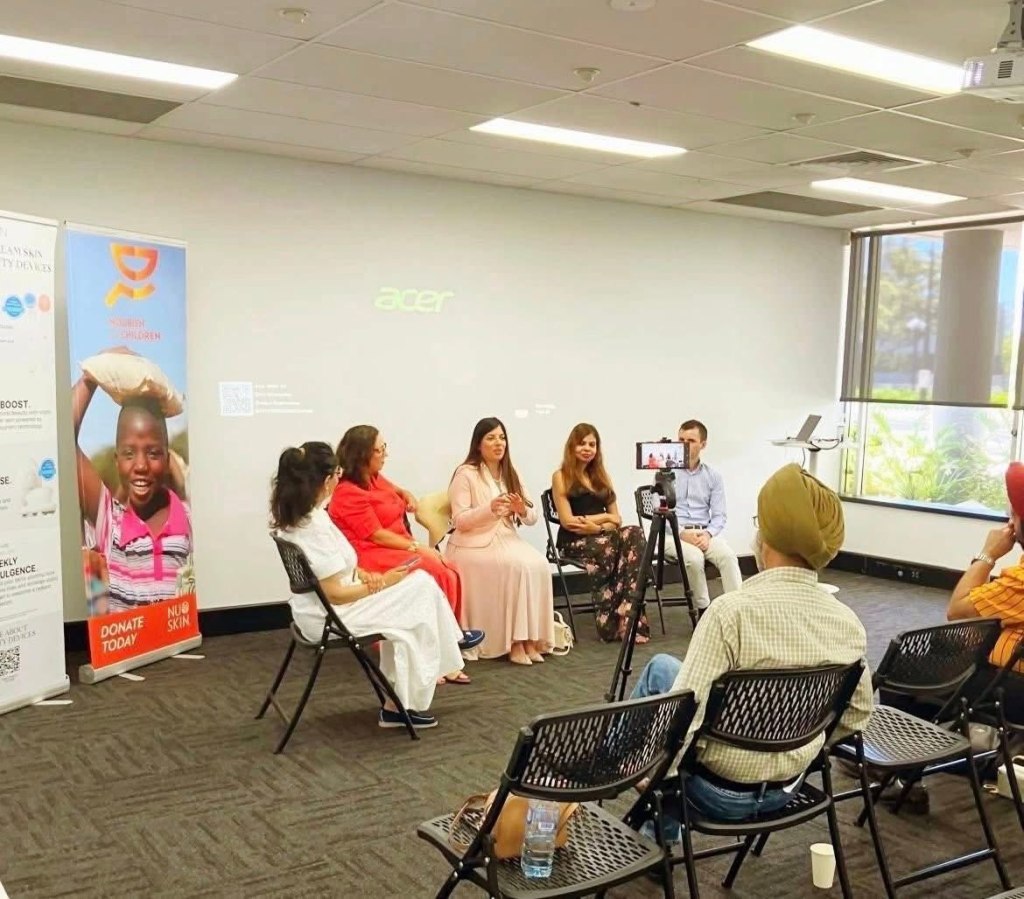
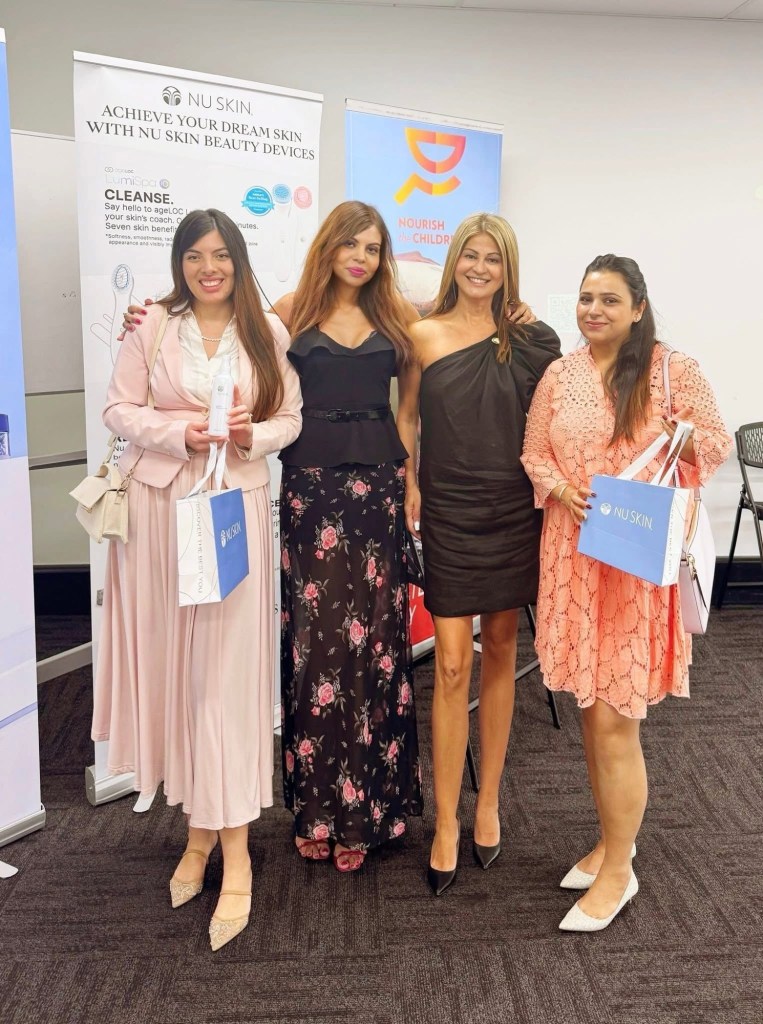
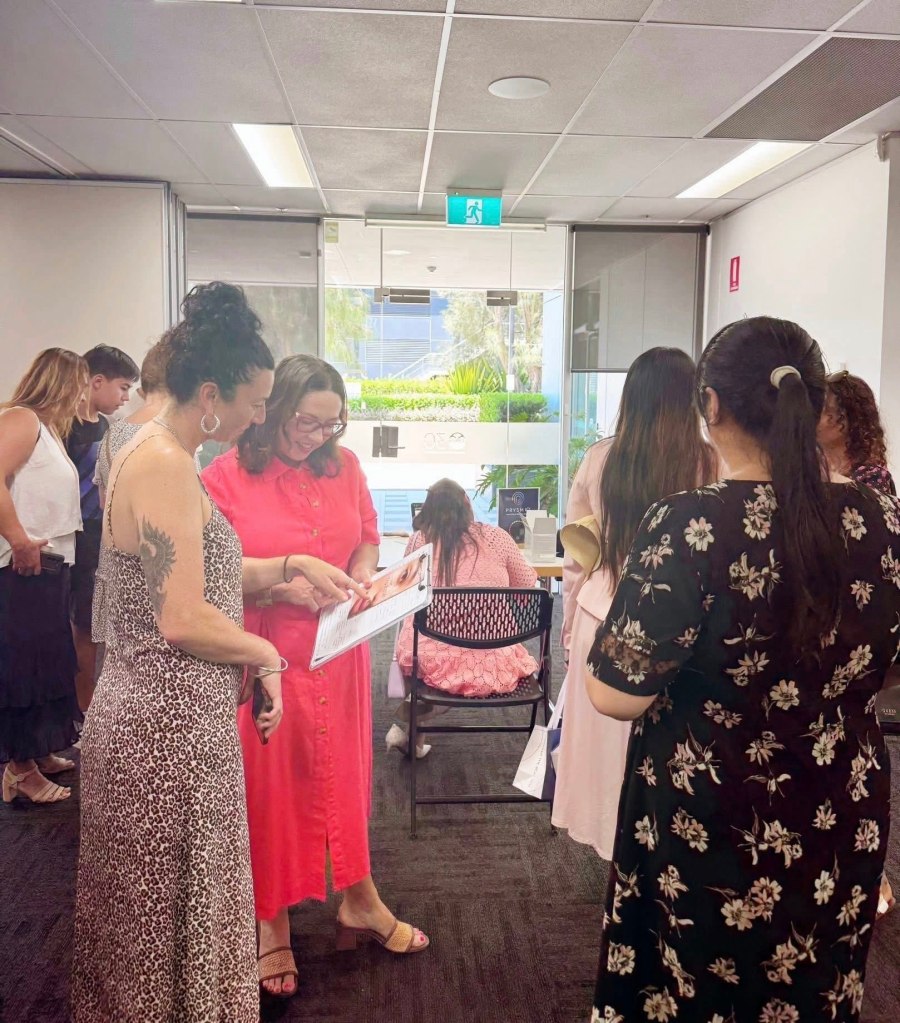
The NextGen Wellness Summit, organised by BWB in collaboration with She Magazine and NSE was a great success! The summit reflected our core philosophy of integrating wellbeing with ambition, creating space for meaningful conversations, innovation, and connection. The energy in the room was inspiring, with curious minds, powerful dialogue, and a shared commitment to elevating how we approach health and wellbeing in today’s fast-evolving world.
The event also provided an opportunity to support and raise awareness for the Nourish the Children initiative by NSE; a sustainable, business-driven program addressing childhood hunger through the distribution of VitaMeal.
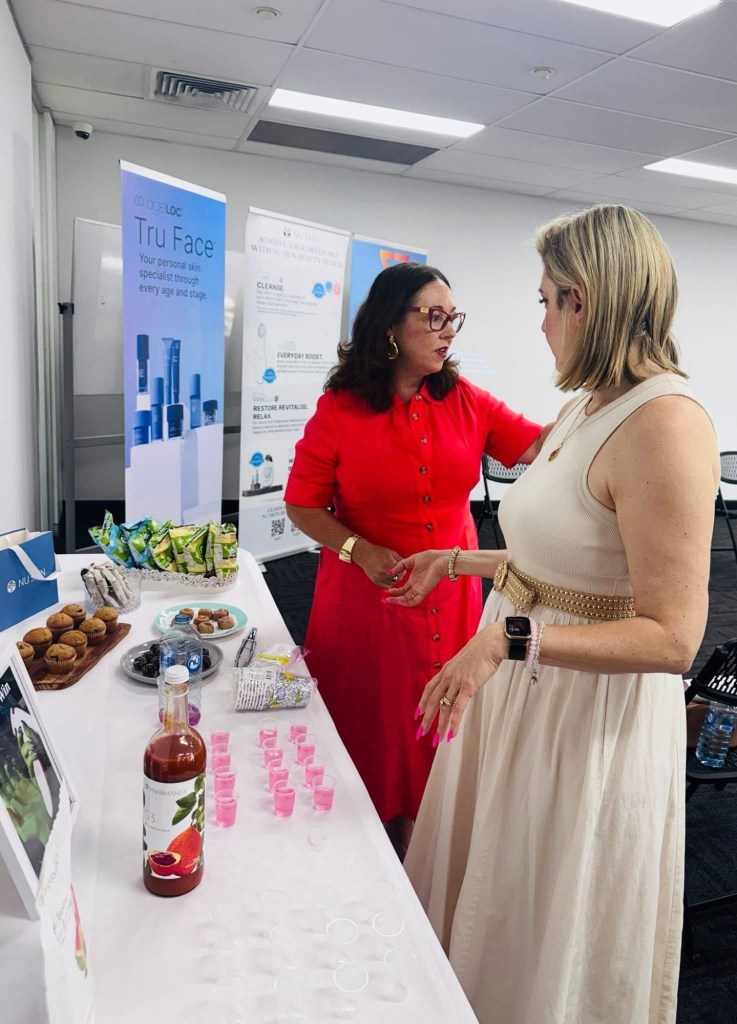
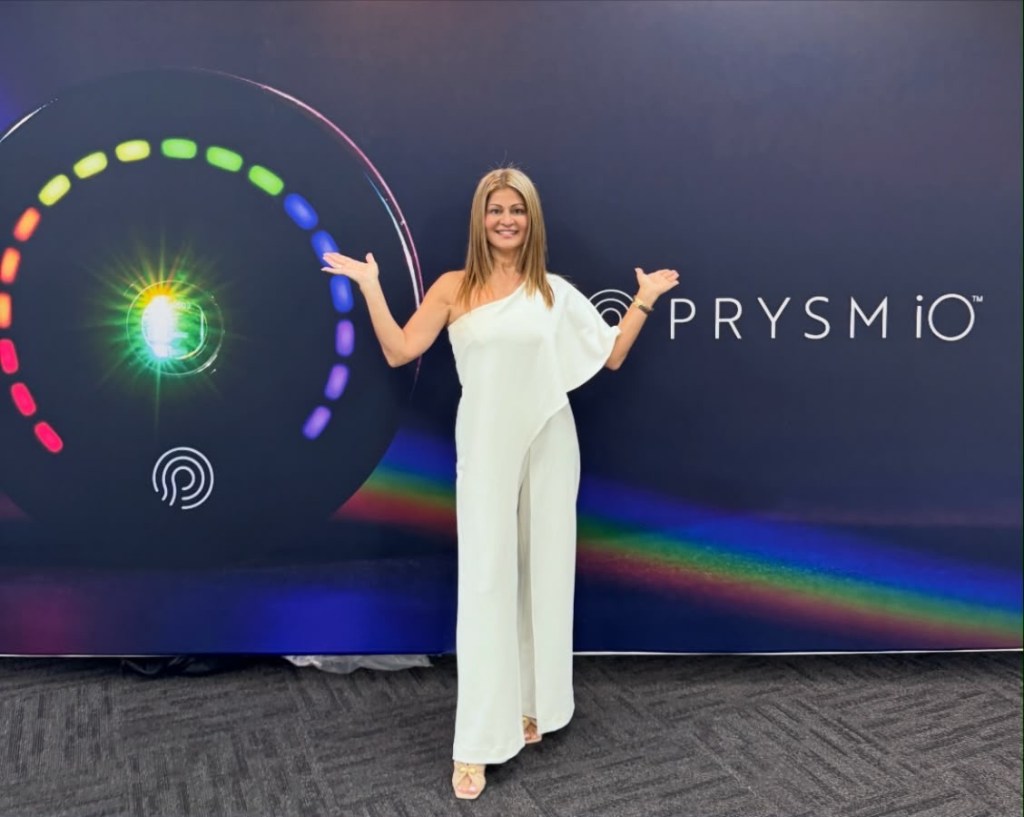
Throughout the panel discussion, key insights were shared around how AI and technology are enabling a shift from reactive to proactive health, empowering individuals to better understand their bodies, anticipate patterns, and make informed decisions. This vision was brought to life through experiences such as the Prysm iO Wellness Scan, complimentary wellness insights, the Glow Bar with health-enhancing drinks, and the Skin & Nutrition Pop-Up; all reinforcing what the future of wellness can look like.
Founder & Panelist Tiya Gorain highlighted how emerging technologies are shifting healthcare to a proactive model, enabling individuals to make informed decisions before challenges arise. She emphasised the importance of using innovation not just for efficiency, but to create more personalised, balanced, and sustainable approaches to health and wellbeing.
A special thank you to Dr. Peter Gangemi, former Mayor of The Hills Shire Council, for his valuable contribution as guest of honour and panelist. His insights into government-led AI initiatives supporting community wellness added depth and perspective to the discussion.
Gratitude is also extended to fellow panelists Katherine Hodge and Margarita Serdaris for their inspiring contributions, as well as to Farheen Syed for expertly moderating the discussion with clarity and warmth. Lence Naumovski brought exceptional energy as emcee, ensuring a seamless and engaging experience for all attendees.
BWB also extends sincere thanks to Harmohan Walia Photography for capturing the event so beautifully and to Sanjhe Vichar Channel for their outstanding videography. Appreciation goes to Aircity for their support, and congratulations to the lucky draw winners, Margarita and Chaandni.
Finally, heartfelt thanks to the entire team and every guest who attended. Your presence, energy, and support made this event truly special. At BWB, we remain committed to creating platforms that empower individuals to grow, connect, and thrive; both in business and in wellbeing.
There are some people who radiate positivity, purpose, and passion for life. Our member Lence Naumovski is one of them. A devoted wife, proud mother, and now a visionary stepping into the world of innovation and wellness, her story is one of love, growth, and reinvention.
Recently, Lence and her husband Tony celebrated an incredible milestone, 30 years of marriage, marking their anniversary with a beautiful trip through Europe.
Their love story continues to blossom, mirrored by the joy of their three daughters, two of whom recently tied the knot, while their youngest, Paris, is chasing her Hollywood dreams as a rising actress who just turned 21. “Family means everything to me,” Lence shares. “I love bringing people together, celebrating life’s moments, and spreading good energy wherever I go.”
But Lence’s journey is not just about family, it’s also about forward-thinking innovation. Always drawn to helping others and staying at the forefront of transformation, she has now embraced an exciting new opportunity that merges technology, beauty, and wellness. By combining AI and DNA-based assessments through a groundbreaking new app, this project aims to revolutionise the Beauty, Health, and Wellness industries. What makes it even more remarkable is the collaboration, a partnership between global tech giant Infosys and NSE, one of the world’s leading brands in anti-aging and wellness. Together, they launched a cutting-edge technology platform to market wellness products in India.
Lence is now on a mission to connect with like-minded visionaries who are ready to embrace innovation and create meaningful impact. “This isn’t just business, it’s about being part of something that can truly transform lives,” she says. Her passion for positive change and her zest for life make her an inspiring example of how we can all evolve, dream bigger, and open ourselves to new possibilities, no matter where we are in life’s journey.
To connect with Lence and explore this groundbreaking venture, reach out and be part of the change she’s helping create. You can email her at lencenaumovski@bigpond.com
Meet our member Nicole Voyatzis, founder of Nicole & Baby (https://nicoleandbaby.com), a luxury pet boutique in Sydney.
“My brand is all about blending high fashion with functional design for pets — from couture-inspired clothing to innovative, anxiety-calming wear — offering exclusive pieces you won’t find anywhere else. Since launching in late 2022, Nicole & Baby has been featured in British Vogue three times and has partnered with leading animal welfare organisations like the RSPCA to help care for abandoned, neglected, and injured animals.
Alongside our boutique, we also host a regular pop-up shop in Double Bay with Fido & Fido, where we run community events that bring together dog lovers, local businesses, and charity partners. This December, I’m hosting the Double Bay Dog Christmas Festival in collaboration with Woollahra Council — a high-energy, glamorous yet community-focused day featuring pet runway shows, VIP experiences, live music, and more, all in support of RSPCA NSW.
My mission is to create beautiful, solution-based pet fashion that not only makes pets look incredible but also deepens the connection between pets and their owners.” – Nicole.
We enjoyed interviewing her recently.
Q. What inspired you to blend high fashion with functional design for pets, and how did that vision evolve into Nicole & Baby?
A. The inspiration came from two great loves — my dogs and my lifelong passion for beautiful design. I’ve always believed pets deserve the same level of craftsmanship, comfort, and style that we expect for ourselves. I saw a gap: pet fashion was either functional but plain, or stylish but impractical. I wanted both. That’s how Nicole & Baby was born — a brand where every piece is runway-worthy yet solves real needs, from weather protection to calming anxiety.
Now, that vision is coming to life in a whole new way with the very first Double Bay’s Festive Fashion Pawrade, l on Saturday, December 7, in collaboration with Woollahra Council. It’s going to be a day of couture dog runway shows, festive activities, and VIP experiences — and I’d love for every pet lover, fashion enthusiast, and local family to join us. Bring your dog, dress to impress, and be part of a moment that’s set to become a new Double Bay tradition.
Q. Nicole & Baby has been featured in British Vogue three times. How did those opportunities come about, and what impact did they have on your brand’s growth?
A. The British Vogue features were beyond a dream — and the most incredible part is they reached out to me after discovering Nicole & Baby on social media. They loved the way we merged high fashion with practical petwear, and that recognition put us on the map internationally. The response was phenomenal, with customers from around the world discovering us. Now, with our first-ever Double Bay’s Festive Fashion Pawrade on December 7, I’m bringing that same high-fashion glamour off the pages of Vogue and into real life — right in the heart of Double Bay. If you’ve ever wanted to experience luxury pet fashion up close, see a designer dog runway, and shop exclusive collections, this is your chance. Mark your calendar and join us for an unforgettable day.
Q. Your anxiety-calming wear is both stylish and solution-oriented. Can you share the design process behind these pieces and the feedback you’ve received from pet owners?
A. This collection came from a personal need — my own dogs, especially Ralphie, get anxious during storms, travel, or loud events. I wanted something beautiful that could also help them feel safe. After months of designing, we created garments that use gentle, hug-like pressure and include a discreet lavender pouch for extra calming benefits. Pet owners have told us their dogs are calmer, more relaxed, and even happier wearing them.
Q. You’ve partnered with the RSPCA and are launching events like the Double Bay Dog Christmas Festival. How do you balance creating a luxury brand with fostering community and supporting animal welfare?
A. For me, luxury isn’t just about aesthetics — it’s about the values and the impact you make. Partnering with the RSPCA felt natural because animal welfare is at the heart of Nicole & Baby. The Double Bay’s Festive Fashion Pawrade, debuting on December 7 in collaboration with Woollahra Council, is a perfect example of that balance.
It’s a glamorous, high-fashion day that also raises vital funds for abandoned, neglected, and surrendered animals. I want everyone who attends to leave feeling inspired — knowing they’ve been part of something beautiful that also changes lives. Whether you’re a pet owner, a fashion lover, or someone who just wants to support a good cause, you’re warmly invited to join us.
Q. Where do you see the future of high-end pet fashion heading, and what exciting projects or innovations are you working on next?
A. I see pet fashion moving toward designs that don’t just look good, but actively improve pets’ lives — from anxiety-reducing clothing to climate-responsive fabrics. For Nicole & Baby, the next step is expanding our anti-anxiety range, experimenting with sustainable luxury materials, and creating couture pieces worthy of the world’s top fashion runways. The Double Bay Dog Christmas Festival on December 7will be the launchpad for many of these innovations. It’s our biggest stage yet, and the perfect opportunity for you to see — and shop — what’s next in luxury pet fashion. If you love dogs, design, or just being part of something new and exciting, you won’t want to miss it.
Money isn’t your problem, but it’s an easy excuse. Time isn’t your problem, but you convince yourself that it is. Your partner, friend, mother, sister, aunt, cousin, co-worker isn’t the problem, but it’s easy to point fingers. Your problem is YOU. YOU. You are the problem. You are the problem, yet, more importantly, you are THE SOLUTION. The thing about changing your life, evolving, expanding… MANIFESTING… It’s scary! (If you say it isn’t you are lying to yourself.) Status quo, comfort zone, playing it safe, that is the real place you should be scared of. Not the change, the growth, STEPPING INTO YOUR PERSONAL POWER. Why do you hold yourself back? Why do any of us hold ourselves back? Because deep down we don’t love ourselves enough to believe that we are worthy of living a life that truly lights us up and creates such a sense of joy we cannot believe how magical it is. We’ve been told that we can’t have this. Don’t be too proud of yourself. Shhhh…we don’t want to make others feel bad. Keep it to yourself if you are so excited, everyone else doesn’t need to know your business. IT’S TIME TO CHANGE THE NARRATIVE. Living a life you love is your birthright and it is everything you imagine it could be and it’s possible and it is AVAILABLE TO YOU. But you have to stop creating your own problems. You have to stop making excuses. You have to step up for yourself and DECIDE that you are ready to lead yourself to your personal power, your personal expansion, your personal destiny. If you want to be limitless, BE LIMITLESS. That is the magic. I know you only half believe me. And that’s OK. I also know you are going to marinate on this because it has already stirred something in your subconscious that is ready to be set free. you are limitless When you are ready to admit it and move, I’m here for you. This conversation continues…
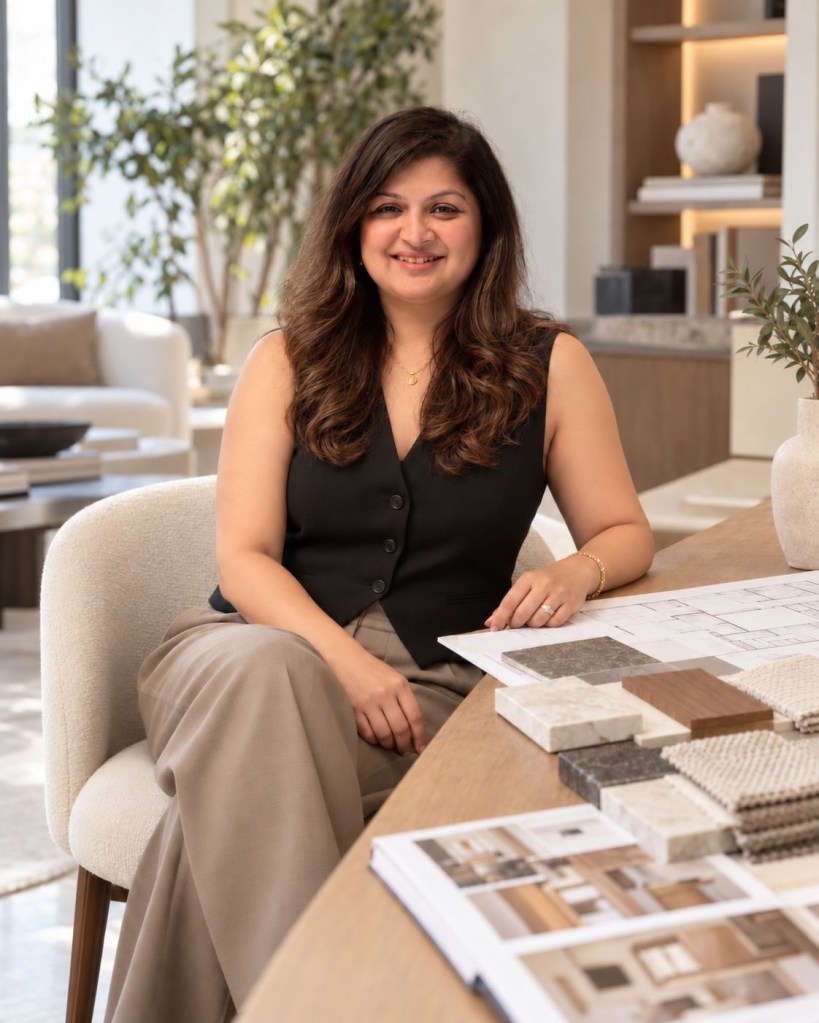
Meet our member the inspiring and successful Meha Shah, owner of Cysha Design Studio (https://cysha.com.au).
“I am Meha from Cysha Design Studio. We design premium homes and renovations across NSW and manage the full process for our clients, from concept through council approval to fully documented, build-ready plans.
Building or renovating a home can feel overwhelming when you’re not sure where to start. That’s where we come in.
At Cysha Design Studio, we help bring your ideas to life from the initial concept and feasibility assessment through to detailed documentation and approvals.
-Custom Home Building Design
– Interior Design
– Joinery Drawings
– 3D Visualisation
– Landscape Design
– Renovations & Extensions Design
– Construction Documentation
– CDC/DA & CC/OC Approvals
Want to start planning your project? Book a consultation with our team today.
Q: At Cysha Design Studio, you handle the full lifecycle, from initial concept and 3D visualisation through to DA/CDC approvals and construction documentation. How does having a single, end-to-end design partner simplify the process for homeowners and ensure their original vision isn’t lost in translation?
A: Having one design partner involved throughout the process creates continuity. The decisions made at the beginning — how a family wants to live, how the spaces should connect and what the overall design should feel like — continue to inform the project as it becomes more detailed.
There are so many interconnected decisions in a home. The layout affects the joinery, the joinery affects lighting and electrical planning, material selections influence detailing, and eventually the furniture and finishing layers need to work with everything that has come before them. When these elements are considered together, rather than independently, the result is much more cohesive.
3D visualisation is a particularly important part of my process because it allows clients to experience the design before it is built. They can understand the proportions, materials, joinery and relationship between spaces and make informed decisions much earlier.
As the project progresses into approvals, technical documentation and construction, those original ideas are translated into increasingly detailed information. That continuity helps reduce the gaps that can occur when a concept passes between multiple parties, while also giving clients one consistent design direction throughout the journey.
Q: When undertaking custom builds, extensions, or major renovations across NSW, what are the most common spatial or functional challenges clients face today, and how do custom joinery and integrated interior-landscape design help solve them?
A: One of the most common challenges I see is not necessarily a lack of space, but space that doesn’t properly support the way a family lives.
Homes need to do a lot today. Kitchens are places to cook, gather and entertain; living spaces often need to accommodate different activities at the same time; and storage needs are significant, but nobody wants a home to feel dominated by storage.
I spend a lot of time understanding those everyday patterns before resolving a layout. Sometimes a relatively small planning change can make a substantial difference to circulation, natural light or the way spaces connect.
Custom joinery is invaluable because it allows us to use space very precisely. Instead of adding storage as an afterthought, it can become part of the architecture of the room — integrating storage, display, work areas or entertainment requirements while maintaining a clean and cohesive design.
The relationship between inside and outside is also important, particularly in Sydney. Considering views, openings, sightlines, materials and how the interior connects with landscaped areas can make both spaces feel more generous. I see those relationships as part of the overall experience of the home rather than separate design decisions.
Q: Building or renovating is a major financial and emotional investment, and many people feel stuck before they even begin. What key steps or feasibility assessments do you take clients through in the early stages to give them total confidence in their budget and build outcome?
A: The beginning of a project is really about replacing uncertainty with information.
I start by understanding what the clients want to achieve, how they live now, what isn’t working and what their priorities are. We then look at the existing property, the scope of work, planning and site considerations, spatial possibilities and the level of investment required.
From there, I like to resolve the larger decisions before moving into the finer details. Space planning comes first, followed by the development of the design, materials, joinery and other key elements.
3D visualisation plays an important role because clients can actually see the direction we are proposing rather than trying to interpret everything from two-dimensional drawings. It often brings clarity to decisions that can otherwise feel quite abstract.
Detailed documentation, specifications and schedules then give the project a clear framework for pricing and construction.
I’m careful not to describe this as guaranteeing a budget or an outcome, because construction involves many external factors. What good design and preparation can do is identify issues earlier, reduce ambiguity and give clients much better information on which to base their decisions. That preparation is where a lot of confidence comes from.
Q: Every client brings a unique lifestyle and story to the table. What is your philosophy on creating custom homes that feel deeply personal and elevated, while still standing up to the practical demands of everyday living?
A: My starting point is always the people who are going to live in the home. I don’t want clients to walk into their finished home and feel as though they have stepped into someone else’s idea of how they should live.
I want to understand their routines, what they value, what they are drawn to and even the small things that matter to them day to day. Then my role as a designer is to interpret that and bring cohesion, proportion and a considered design direction to it.
For me, practical and beautiful are not competing ideas. A beautifully detailed kitchen still needs to work when the family is rushing in the morning. Joinery needs to look resolved but also accommodate what actually needs to be stored. Materials need to create the right atmosphere while being appropriate for how the space will be used.
The same thinking continues into furniture, lighting, rugs, window furnishings, art and styling. These aren’t simply finishing touches — they are part of creating a complete home.
Ultimately, I think the most successful homes feel personal without feeling contrived. They reflect the people living there, but every element has been considered in relation to the whole. That balance between individuality, function and a strong design language is what I aim for in every Cysha project.
Meet our member, the inspiring and successful Hema Rao (https://hemarao.com).
Hema supports people who are feeling stressed, lonely or are at a crossroads in life. Through life coaching, gentle yoga, breathwork and meditation, she creates a welcoming space to pause, reconnect and move forward with confidence.
She offers one-to-one support as well as group sessions and workshops in Sydney and online.
If you would like to explore a session or invite Hema to run a workshop for your group, you message her on +61 0402 380 425.
We recently enjoyed interviewing her.
Q. What moment or experience first inspired you to step into life coaching, yoga and breathwork as a path of service?
A. The real turning point was losing my dad. When I came back from India in 2019, right as Covid hit, I lost interest in almost everything, the family business, the digital marketing work, none of it felt like me anymore.
I had always loved helping people and been involved in different charities, so I started asking, “What can I do that actually makes a difference?” Life coaching came up. I trained with Tony Robbins and never looked back.
Yoga and meditation had interested me since my twenties, so over time coaching, yoga and breathwork just came together naturally.
When I see someone who felt completely lost start to smile again, believe in themselves again, that’s when I know this is what I’m meant to do.
Q. When someone comes to you feeling overwhelmed or unsure of their next step, what is the first shift you help them make?
A. First, I listen. Most people don’t need to be told what to do, they need a safe space to speak openly and feel understood.
Then I help them accept where they are right now, without judgment. Acceptance isn’t giving up , it’s “okay, this is my situation. What can I do from here?”
When someone is overwhelmed, everything feels like one huge problem, so we break it down into one small step at a time. I want them to leave thinking, “I can’t fix everything today, but I’m not helpless. There is something I can do.”
Q. You speak about creating a space to “pause and reconnect.” What does pausing truly mean in a world that rarely slows down?
A. Pausing means stopping for a moment and coming back to yourself. We are always rushing , replaying yesterday, worrying about tomorrow and we don’t realise how disconnected we have become.
So pausing can be as simple as a deep breath, feeling your feet on the ground, noticing your body. It reminds you: I am here, I am breathing, this moment is okay.
Sometimes that one breath is enough to respond calmly instead of reacting.
Q. Your Philosophy is “Rise. Heal. Radiate.” Can you share how these three words guide your approach to wellbeing and the transformation you see in your clients?
A. These three words describe the journey many of us go through.
Rise is deciding you don’t want to stay stuck in sadness or confusion, even without knowing exactly how, you take the first step.
Heal is acknowledging what you’ve been through. Not forgetting it, but reaching a place where it no longer controls you.
Radiate is finding yourself again , your confidence, your genuine smile, a lightness in you. It doesn’t mean life is suddenly perfect. It means you’ve found your strength again.
That’s what I want for the people I work with , to rise from where they are, heal gently, and radiate their own light.
Meet Speaker & Coach Angie Z, an inspiring and successful member of our BWB community. Angie is a distinguished Mental Health and Mindset Speaker, Mindset Coach, Facilitator, Results Coach and NLP Practitioner known for her refined, transformational approach to personal growth, resilience and high-performance mindset. She works with individuals and teams to transcend self-limiting beliefs, cultivate quiet confidence, strengthen emotional resilience and create lasting personal and professional elevation.
With more than 40 professional qualifications and extensive experience training and coaching thousands of individuals and employees, Angelina brings a sophisticated blend of expertise, lived wisdom and strategic insight to the personal development arena. Her work is anchored in the belief that a growth mindset is not simply a tool for success, but the foundation for enduring wellbeing, leadership presence and elevated performance.
As the former host of the Zillionaire Superstars podcast, Angie curated conversations with globally recognised entrepreneurs, thought leaders and success mentors, including Melissa Ambrosini, Barbara Huson, Aaron Sansoni, Mark Lack, Joel Brown, Dr John Demartini, Chip Baker, Roy Huff, Cole Hatter, Chris Widener, Ruby Lee, Edward Zia, Kelly Roach, Tyler Wagner, Caleb Maddix, Ron Malhotra, Ash Playsted, Jordan Paris, Josh Perry, Pete Wargent, Chris andEric Martinez, Michael Yardney, Ryan Stewman, Daniel Murray and Jeremy Liddle, among many others. Her mindset articles and entrepreneur interviews have also been featured on respected platforms including Inc.com (https://www.inc.com/author/angelina-zimmerman) andAddicted2Success (https://addicted2success.com/success-advice/successful-people-create-wealth-poor-people-demolish-it/), positioning her as an elegant and trusted voice in mindset, personal growth and success education.
We recently enjoyed interviewing her.
Q. You emphasise that a growth mindset isn’t just about achieving high performance, but is the foundation for enduring personal wellbeing. Where do you see high achievers make the mistake of sacrificing mental health for success, and how can they pivot toward “balanced elevation”?
A. High achievers often make the mistake of treating wellbeing as something to earn after success, rather than recognising it as the foundation that sustains success. A powerful pivot begins with building daily foundations that support energy, clarity and emotional resilience. From there, the focus shifts from constantly pushing harder to becoming more intentional:
Identifying the mindset patterns that create pressure, redefining success in a way that includes health and fulfilment, and choosing habits that allow high performance to be both sustainable and deeply rewarding.
Q. With your background as an NLP Practitioner and Results Coach, what is one subtle, self-limiting narrative that surprisingly holds even high-performing leaders back, and what is your favorite tool or technique to reframe it?
A. One subtle narrative that can hold even highly accomplished leaders back is the belief that they must have all the answers before they can lead with confidence.
During periods of change, uncertainty or heightened responsibility, this can quietly show up as overthinking, hesitation or self-doubt, even when their track record is strong. It is often revealed through the language they use about themselves, their capacity, or what they believe is possible.
My favourite tool for reframing limiting beliefs is the A-B-C-D-E-F process because it is simple, practical and consistently effective. It helps leaders identify the activating event, uncover the belief attached to it, recognise the consequence of that belief, dispute the limiting interpretation, create a more empowering explanation, and move forward with a fresh, focused action.
The A-B-C-D-E-F model is a practical reframing process that helps someone move from a limiting belief into a more empowered perspective and action. This is a valuable tool that helps leaders identify the hidden story behind their hesitation, challenge it, and replace it with a belief that supports confident, aligned action.
Here’s what each step means:
A – Activating Event: Identify the situation that triggered the response.
Example: A leader is asked to speak at a major event.
B – Belief: Notice the belief or story they attach to that event.
Example: “I’m not experienced enough to do this well.”
C – Consequence: Recognise how that belief affects their emotions, behaviour, and decisions.
Example: They feel anxious, overprepare, hesitate, or consider saying no.
D – Dispute: Challenge the belief by questioning whether it is fully true or useful.
Example: “What evidence do I have that I am capable? Have I succeeded in similar situations before?”
E – Empowering Explanation: Replace the old belief with a more constructive interpretation.
Example: “I have valuable experience to share, and preparation will help me deliver with confidence.”
F – Forward Action: Choose one clear action that reinforces the new belief.
Example: Accept the speaking opportunity, prepare key points, and rehearse with support.
Q. Having hosted the Zillionaire Superstars podcast and interviewed dozens of global thought leaders like Dr. John Demartini and Barbara Huson, what is the single most consistent mindset trait you observed among the world’s top performers?
A. The most consistent mindset trait I have observed among world-class performers is unshakable self-belief. They are not immune to setbacks, uncertainty or criticism, however, they have a remarkable ability to remain connected to their vision even when external evidence suggests they should stop, pivot or play smaller.
They seek out resources, surround themselves with the right people, stay anchored in purpose, and continue taking aligned action. Their confidence is not based on perfect circumstances; it is built through their commitment to keep growing, learning and moving forward.
As Serena Williams explains: “You have to believe in yourself when no-one else does.
Q. You often speak about cultivating “quiet confidence” rather than loud bravado. In today’s noisy, social-media-driven world, how can women in business build genuine, authentic leadership presence without feeling like they have to shout to be heard?
A. Women in business can build genuine leadership presence by becoming deeply grounded in who they are, what they value and the impact they are here to make. Quiet confidence is not about shrinking back; it is about leading from inner certainty rather than external noise. It shows up in the way a woman communicates with clarity, listens to others, sets boundaries with grace, makes decisions with conviction and allows her results, consistency and character to speak powerfully on her behalf. Rather than attempting to be the loudest voice in the room, authentic leaders focus on being the aligned, prepared and purposeful. That kind of presence is memorable because it is not performed; it is embodied.
Meet our new member, the inspiring & successful Jyotsna Mishra.
Jyotsna Mishra is a Sydney-based landscape architect, designer, and creative entrepreneur with a passion for blending culture, design, and storytelling. With a background in architecture and landscape architecture ,she has built a career at the intersection of design innovation, placemaking, and digital workflows in the built environment. She has contributed to conversations around BIM and landscape design through industry platforms including Landscape Australia.
Alongside her professional design career, Jyotsna is the founder of Kahaani Sydney; a handcrafted Indian décor and lifestyle brand inspired by heritage, craftsmanship, and meaningful living. Through Kahaani Sydney, she brings together timeless Indian artistry with contemporary aesthetics, curating soulful pieces that celebrate culture, storytelling, and the beauty of handmade design.
Her work is driven by a deep appreciation for thoughtful spaces, artistic detail, and creating experiences that feel authentic, warm, and deeply personal.
Kahaani Sydney is a handcrafted Indian décor and lifestyle brand that celebrates the richness of Indian artisan heritage through timeless, soulful design. Rooted in storytelling and craftsmanship, Kahaani Sydney aims to bring meaningful pieces into modern homes while supporting traditional artisans and preserving handmade techniques passed down through generations.
“Our vision is to create a bridge between culture and contemporary living by offering thoughtfully curated décor, textiles, and lifestyle products that carry warmth, authenticity, and individuality. Every product reflects a story; of skilled hands, cultural traditions, and the beauty of slow, intentional craftsmanship.
At Kahaani Sydney, we believe homes should feel personal and inspiring. Through carefully designed collections, we strive to help people create spaces that are elegant, comforting, and deeply connected to heritage. Alongside promoting sustainable and ethical production, we are passionate about empowering artisans and giving handmade creations a place in modern Australian living.
More than a brand, Kahaani Sydney is a celebration of culture, creativity, and human connection, bringing stories from India into homes across Australia in a modern and meaningful way.” Jyotsna says.
We recently enjoyed interviewing her.
Q. You work across two very different worlds; architectural design innovation with BIM and digital workflows, and handcrafted, heritage-rooted décor at Kahaani Sydney. How does your landscape architecture background actually shape the way you curate and design Kahaani’s collections?
A. My landscape architecture background has shaped Kahaani more deeply than one might initially expect.
As a landscape architect, I’ve always been interested in how people experience a space; not just how it looks, but how it feels, how people move through it, what they notice and, ultimately, what makes a place feel like it belongs to them. That philosophy naturally carries into the way I curate Kahaani.
I don’t look at a piece simply as an object. I think about its relationship with the space around it; its scale, proportion, texture, materiality, colour and even the way light interacts with it. I’m always asking myself: where does this piece belong, and what feeling can it create within a space?
There is also a beautiful contrast between my work with BIM and digital workflows and the handmade world of Kahaani. BIM is about precision, systems and efficiency, while traditional craftsmanship celebrates the human hand, time and the subtle imperfections that make each piece unique.
I don’t see those worlds as contradictory. For me, they represent two different expressions of thoughtful design.
For me, Kahaani is where my understanding of space meets my emotional connection to material, craft and heritage.
Q. Kahaani Sydney’s story is built around “the beauty of slow, intentional craftsmanship”. What was the moment or realisation that pushed you to build a brand around preserving these traditional artisan techniques rather than staying solely in your design career?
A. I think the realisation came from understanding how easily heritage can become something we admire from a distance rather than something we continue to live with.
Coming from India and working in design and BIM management in Australia with my husband through wkndBIM, I found myself constantly moving between two worlds. We were managing interior and BIM projects and importing large-scale elements such as tubs, sinks and tabletops from India for hospitality and high-end residential projects. But when it came to designing our own apartment, we were working with a very limited budget and suddenly found ourselves looking for smaller, more intimate pieces that could still carry meaning.
That experience changed something for us. We realised we weren’t simply trying to furnish an apartment; we were trying to recreate a feeling of home; something intangible, emotional and deeply connected to memory and belonging. Being far from home made that feeling even more important.
Yet we struggled to find objects that felt intentional, rooted and accessible at the same time. As designers, we also found it difficult to simply choose something off the shelf unless it genuinely resonated with us.
That made us wonder how many other people might be in a similar position — people who love Indian craft and storytelling, who want to bring some of that into their homes, but may not have large budgets or may simply enjoy curating their spaces with care and intention.
That gap led us to formally start Kahaani Sydney about a year ago as a B2C extension of our design practice. We wanted it to sit alongside wkndBIM, but speak in a more personal voice; one that could become part of people’s everyday lives and homes.
For us, it was never about preserving craft as something static or distant. It was about allowing it to continue living; giving traditional craftsmanship a place in contemporary homes, new contexts and new stories.
Because when a handcrafted piece finds a place in someone’s home, its story doesn’t end with the artisan who made it. In a way, a new chapter begins.
Q. You talk about creating spaces that feel “authentic, warm, and deeply personal”. Can you walk us through how you translate an artisan’s story in India into a piece that resonates with a home in Australia?
A. For me, it is about translation rather than transplantation.
I don’t want someone to bring a Kahaani piece into their home and feel that they have simply imported an Indian object. I want it to feel completely at home in an Australian space while still retaining the story, craftsmanship and cultural identity of where it came from.
I begin with the craft itself; the material, the technique, the history, the colours and the hands behind it. From there, I think about context. How will it sit within a contemporary Australian home? What will surround it? How will the light interact with it? Does it become a focal point, or does it quietly introduce texture, warmth and character?
That is where my design background becomes important. I naturally think about proportion, materiality and the relationship between an object and its surroundings.
Our collections explore traditional techniques such as marble inlay, hand-painted marble, meenakari, handwoven and embroidered textiles and block printing, but we curate them with contemporary living in mind.
Ultimately, I want each piece to start a conversation. Someone might initially be drawn to a marble inlay piece simply because it is beautiful. Then they discover how it was made, where it came from and the craftsmanship behind it.
That is when it becomes more than décor. It becomes a story that has travelled from one culture and found a new chapter in another.
Q. Balancing a professional design career with founding and running a heritage brand is a lot. What does supporting your artisan partners in India actually look like day-to-day, and what has been the hardest part of building that bridge between two cultures?
A. For me, supporting our artisan partners begins with relationships rather than transactions.
For our marble products, we work closely with artisans and family-run businesses in Jaipur. For our handwoven and embroidered fabrics from Kolkata, we work with families I have known for some time. That familiarity and trust is important because Kahaani is built around relationships, not simply sourcing products.
A lot of the creative work happens between our sourcing trips. At the moment, we travel to India twice a year, so throughout the year I’m developing ideas, refining designs and finalising dimensions so that when we are there, we can sit with the artisans and turn those ideas into samples specifically for Kahaani.
Embroidery is an even more collaborative process because of the time and skill involved. I might develop a design here in Sydney, share it over WhatsApp and then have a video call to explain what I’m envisioning. We select the fabric, discuss the details, and then the crafting hands take over and bring the design to life.
Something particularly important to us is making sure our artisans don’t carry the commercial risk of a young business. When we commission work, we pay for that work regardless of when the finished piece sells. We are still growing ourselves, but we want the people we work with to be able to grow alongside us.
The biggest challenge has been finding the balance between staying true to the craft and allowing it to feel relevant to contemporary Australian life. I never want to dilute the craftsmanship simply to make something easier to sell. At the same time, I don’t believe heritage should remain frozen in time.
For me, keeping heritage alive means giving it a sustainable reason to continue; allowing traditional skills to find new homes, new audiences and new stories.
That is the bridge Kahaani is trying to build between India and Australia.
There is a particular kind of energy that shows up when someone is finally doing the thing they were meant to do. You can feel it before they even say a word and that’s exactly the energy Lence Naumovski is bringing right now.
The Shift That’s Turning Heads
Lence’s move from the corporate world into entrepreneurship isn’t just a career change, it’s a visible transformation, and people are noticing. There is real momentum building, the kind that comes from showing up consistently and letting the results speak for themselves.
“What’s been working,” Lence shares, “is that as people see me making the transition and sharing what I’m doing, it’s naturally attracting interest and opening up more conversations about the business opportunity.”
That’s the quiet power of authenticity in action. No hard pitch, no forced narrative; just someone walking a real path, out loud, and letting curiosity do the rest.
Curiosity as a Currency
As a wellness coach who also helps people build their own businesses, Lence understands something a lot of entrepreneurs miss: people don’t connect with polish, they connect with process. And that’s exactly what’s happening.
“I’m finding people are becoming curious about what I’m doing and asking questions,” Lence explains, “which is creating some really good conversations and potential connections.”
Those conversations are where the real magic lives; not in a sales script, but in genuine curiosity meeting genuine transformation. Every question is an invitation and Lence is answering them one authentic exchange at a time.
Wellness Meets Business, By Design
What makes Lence’s approach stand out is the integration; she is not just coaching people on mindset or wellbeing, and she is not just teaching business tactics. She is showing what’s possible when the two come together: a life and a business built on the same foundation of intentional growth.
Her own journey is the proof of concept. The momentum isn’t manufactured; it’s earned, one honest conversation at a time.
The secure woman knows words are easy. She has heard them many times before, but what she waits for now is consistency. It can be easy to fall for grand gestures, declarations of love, conversations about forever and promises to change. These things can make you feel special, loved and chosen. They can sweep you off your feet and leave you believing you have found someone you can create a solid life with.
Grand gestures and empty promises do not create emotional safety, because words alone are easy. Emotional safety is built through consistency. It is found in the everyday moments, the regulated responses and the steady behaviour that calm our nervous system and allow us to trust.
This is where her discernment begins to sharpen. She stops listening for the version of love someone can describe and starts noticing the version of love they can sustain. She no longer asks only, do they want me? She begins asking, can they meet me with steadiness, honesty and emotional responsibility when things are not easy?
What behaviour is being shown, this will always tell you what is really going on. Are the words and behaviour congruent or are they two different things all together? Listen to the words and watch the behaviour. When they are irritated, do they communicate or withdraw? When they are triggered, do they repair or let distance grow? When they feel insecure, do they seek reassurance directly or create tension as a way of control? This is the truth, not the words that are used to create connection. Anyone can say the right thing, make promises and create closeness when the mood is high and the stakes are low.
The secure woman has evolved past being impressed by intensity. She pays attention to patterns and watches for follow‑through. She notices whether someone’s behaviour aligns with their declarations. She knows that trust is not rebuilt through passion, apologies or poetic words but through repetition of behaviour. It’s seen through the small, steady actions that show emotional maturity. It’s seen through the moments where someone chooses repair over pride. It’s seen through the times they stay present instead of disappearing into their wounds.
The secure woman no longer confuses chemistry with compatibility or intensity with intimacy. She understands that consistency is the real love language, the one that does not need to be spoken because it is lived. It is seen in the alignment between words and behaviour.
Here are a few reflective questions to ask yourself as you continue evolving into the secure woman you truly are:
Where have you believed words over patterns?
What behaviours do you now recognise as emotional inconsistency?
How do you respond when someone’s actions don’t match their declarations?
What does emotional safety look like for you in the small, everyday moments?
Where have you mistaken intensity for genuine connection?
What becomes clear when you observe someone instead of interpreting them?
This evolution is not only about seeing others more clearly, but also about trusting herself more deeply. The secure woman learns to honour the discomfort that rises when words and behaviour do not match. She no longer talks herself out of what she knows. She no longer abandons her intuition just to keep a connection alive. Her peace becomes more important than potential.
The evolution of the secure woman is reflected in her shift from being moved by promises to being grounded in patterns. She no longer waits for potential to bloom or for words to become actions. Instead, she watches how someone shows up when it is inconvenient, uncomfortable or unfiltered. In this clarity, she discovers a deeper truth: real love is not loud, it is consistent. It is steady and it is lived. The person who is meant for her will not need grand gestures to prove it; their everyday presence will speak for itsel
A secure woman eventually reaches the point where she no longer negotiates her nonnegotiables. Not dramatically, not angrily and not as a threat. She states her needs with clarity: “This is what I require.” “This is what respect looks like to me.”
Speaking your truth from a grounded place changes everything. When you are genuinely prepared to make the changes, you know are needed, not to manipulate orprovoke fear, but because you value yourself, your energy shifts. You are no longer trying to earn love. You are choosing to honour yourself.
You stop performing emotional gymnastics. You stop overexplaining. You stop shrinking, bending and abandoning yourself to keep a connection that costs you your peace. Something remarkable happens when you stop overfunctioning: the other person either rises or falls away.Both outcomes offer clarity.
This is the power of clear boundaries: not walls, not ultimatums but a firm and unwavering truth about what you will and will not accept. It’s the moment you stop trying to convince someone to treat you well and start watchingwhether their actions can meet your standards.
The secure woman doesn’t set boundaries to control others. She sets them because she has chosen herself. She understands that respect is not something she negotiates; it’s something she embodies. The people who are meant to stay will meet her there without being pushed, persuaded or carried.
She realises that losing herself to keep love was never love at all. Choosing herself is not rejection, it is selfrespect. It is the decision to stop auditioning for safety and start standing in the truth of her own worth.
Here are a few reflective questions for you to ask yourselfas you evolve into the secure woman that you truly are:
• Where have you been negotiating your nonnegotiables?
• What boundary have you been afraid to state clearly?
• What shifts when you speak your needs from a calm, grounded place?
• Who rises to meet you when you stop overfunctioning?
• Where have you mistaken tolerance for strength?
• What becomes possible when you stop trying to secure love and start assessing whether it is safe?
• Where are you still betraying yourself to keep the peace?
• What are you calling love that is costing you your self-respect?
The evolution of the secure woman is marked by the moment she realises that boundaries are not barriers; they are invitations. Invitations for healthier connection, deeper respect and relationships built on mutual effort rather than emotional imbalance.
When she stands firmly in what she requires, she stops measuring her worth by who stays and who leaves. She trusts that what falls away was never aligned and what remains is meant for her. In that clarity, she discovers a deeper peace: the peace that comes from choosing herself without apology.
Choose yourself. Not only when it is easy. Not only when everyone understands. Choose yourself because the woman you are becoming depends on it.
Meet the inspiring and successful Blair Du, a member of our BWB Community. Blair is the founder of Koala View (koalaview.com.au), working at the intersection of commercial decision-making and technology, with a focus on how businesses can improve outcomes through better customer experiences.
Her background in business banking, advising business owners on capital structure and risk within evolving commercial environments, shaped a commercially grounded perspective that extends beyond transactions to broader strategic outcomes.
With a CPA background, Blair brings a structured, analytical approach to interpreting financial performance, cash flow, and risk within real commercial contexts.
Her leadership experience as Treasurer at Abundant Water has further strengthened her commercial judgement and strategic thinking, shaping an approach that looks beyond individual transactions to the broader direction of a business.
We recently enjoyed interviewing her.
Q. Your career moved from business banking and capital advisory to working at the intersection of commerce and technology. What was the turning point that drew you toward customer experience and tech-driven solutions?
A. The turning point came from spending years speaking with business owners across different industries.
Whether I was reviewing financial statements, discussing growth plans, or helping businesses access capital, I kept hearing the same challenge: “How do we grow revenue sustainably?”
What became increasingly clear was that many businesses were spending more to acquire customers, yet a significant portion of those customers never completed a purchase. The issue wasn’t always product quality or traffic volume. Often, customers simply lacked the confidence to make a decision.
That observation led me to become fascinated by customer experience. I started exploring how technology, particularly AI, could reduce uncertainty and help customers make decisions with greater confidence.
KoalaView was born from that idea: using AI to bridge the gap between customer interest and customer action.
Q. How does your accounting and financial analysis background shape the way you approach customer experience? Do you think most businesses undervalue the financial case for investing in CX?
A. My financial background has probably made me more disciplined in how I think about customer experience.
A lot of businesses view CX as a branding initiative or a marketing expense. I tend to see it as a revenue and efficiency lever.
When I look at customer experience, I’m asking questions such as:
Does it improve conversion rates?
Does it increase average order value?
Does it reduce customer acquisition costs over time?
Does it improve customer lifetime value?
Those are ultimately financial outcomes.
I do think many businesses still underestimate the financial impact of CX because the benefits are often spread across multiple metrics. But when customers feel more confident, they buy faster, buy more frequently, and return more often. The financial impact can be significant.
In my view, great customer experience isn’t just good service, it’s a growth strategy.
Q. What gap in the market did you identify that led you to found Koala View, and what problem are you most passionate about solving for your clients?
The gap was surprisingly simple.
Online shopping gives customers access to endless products, but it doesn’t always help them answer the most important question:
“How will this look in my life?”
For furniture, that might be:
“Will this sofa actually suit my living room?”
For fashion:
“Will this outfit suit me?”
For homewares:
“Will this fit the style I’m trying to create?”
Traditional product photos are excellent at showing the product, but they’re often not enough to help customers imagine ownership.
At KoalaView, we’re helping retailers solve that visualization gap. By combining a customer’s real room photo or personal image with the retailer’s product catalogue, we generate personalised visuals that help customers picture the product in their own context.
The problem I’m most passionate about solving is reducing purchase hesitation. When customers can confidently visualise a product becoming part of their lives, better purchasing decisions naturally follow.
Q. As Treasurer at Abundant Water, you have applied your commercial thinking to a purpose-driven organisation. How has that experience influenced your perspective on what “good business” really looks like?
A. That experience reinforced a lesson that I think applies to both nonprofits and commercial organisations.
Good business isn’t just about generating revenue. It’s about creating value that is sustainable and meaningful.
At Abundant Water, every financial decision ultimately came back to impact. Resources were limited, so every dollar had to be allocated thoughtfully. That discipline taught me that success isn’t measured solely by financial performance, but by whether you’re creating outcomes that genuinely matter to people.
It also showed me that purpose and commercial thinking aren’t opposites. In fact, the strongest organisations often combine both.
For me, good business means building something that creates value for customers, supports stakeholders, operates responsibly, and remains financially sustainable over the long term.
When those elements are aligned, businesses don’t just grow, they endure.
Meet our member, the inspiring and successful Sarita Kataria. Sarita is the founder of Grow360 (https://grow360.net.au/), a buyer’s advocacy and property advisory firm dedicated to helping families and business owners build lasting wealth through strategic property acquisition across Australia.
With a client-first philosophy at the heart of everything she does, Sarita has built Grow360 around three core principles: education, transparency, and tailored strategy. She believes that smart property investment isn’t one-size-fits-all, and her approach reflects that, with every solution carefully aligned to each client’s budget, financial goals, lifestyle, and existing portfolio position.
Grow360’s services span the full spectrum of property investment, from full turnkey house and land packages and high cash flow dual key properties, to established residential homes, dual occupancy investments, and commercial opportunities across Australia. Whether a client is taking their first step into property investment or expanding a sophisticated portfolio, Sarita and her team guide them through every stage, from initial strategy and market research through to negotiation, acquisition, and settlement coordination.
What sets Sarita apart is her commitment to empowering clients with knowledge, not just transactions. Her mission is to simplify the often overwhelming world of property investing, helping everyday Australians make confident, informed decisions that don’t just grow their wealth today but create generational impact for years to come.
For anyone serious about building a property portfolio with purpose and precision, Sarita Kataria and Grow360 are the trusted partners to have in your corner.
We recently enjoyed interviewing her.
Q. What inspired you to found Grow360, and what gap did you see in the property advisory space that wasn’t being served especially for families and business owners?
A. Grow360 was inspired by my own property journey. When buying our first home and investment property, we spent nearly two years navigating the process and missed opportunities that ultimately cost us over $200,000 in potential growth.
I realised many families and business owners face the same challenges—lack of time, uncertainty, and conflicting advice. That’s why I founded Grow360: to provide trusted, personalised property guidance so clients can make confident decisions, avoid costly mistakes, and achieve their financial goals faster.
Q. Property investing can feel overwhelming for many people. How does Grow360’s education-first approach change the experience for first-time investors versus seasoned portfolio builders?
A. At Grow360, we don’t just help clients buy their next property. We take the time to understand their borrowing capacity, long-term goals, lifestyle aspirations, and current portfolio.
Our education-first approach ensures clients understand the “why” behind every recommendation. Whether they’re first-time investors or experienced portfolio builders, we focus on creating a tailored strategy that helps them build wealth through property without unnecessarily compromising the lifestyle they’ve worked hard to create.
Q. Dual key and dual occupancy properties seem to be a strong focus for you. Why do you believe these are particularly powerful vehicles for cash flow and generational wealth right now?
A. Dual key and dual occupancy properties are a strong focus because they can generate higher rental income than a traditional single dwelling. This additional cash flow helps our clients hold their properties more comfortably, especially as interest rates and living costs change.
More importantly, the stronger income can improve borrowing capacity, allowing investors to continue growing their portfolio sooner rather than being limited by serviceability. When combined with the right location and long-term strategy, these properties can be powerful tools for building sustainable wealth and creating a legacy for future generations.
Q. What is the biggest mistake you see clients make before they come to Grow360, and what would you say to someone who has been sitting on the fence about starting their property investment journey?
A. 4. One of the biggest mistakes I see is that people consume too much social media, news, and market commentary, which often leads to fear and assumptions that it’s “not the right time” to buy.
The reality is that property investing is not about timing the market perfectly—it’s about having the right strategy for your personal circumstances. Every investor’s financial position, borrowing capacity, goals, and risk profile are different.
For someone sitting on the fence, my advice would be to speak with a qualified professional and get tailored advice rather than relying on headlines or opinions online. A conversation can provide clarity on your options and help you make an informed decision. Waiting for the “perfect time” often means missing opportunities that may never come again.
AI Won’t Replace Great Leaders But It Will Expose Weak Ones
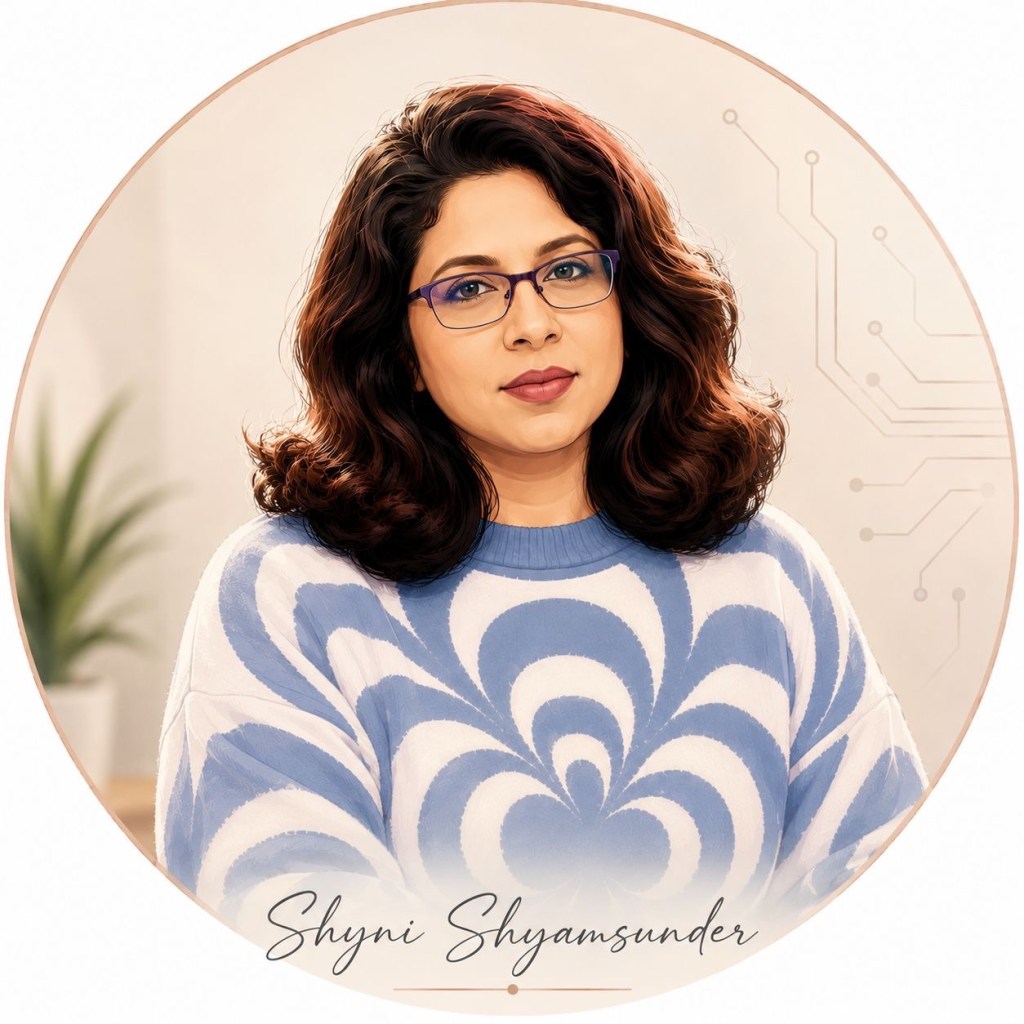
By Shyni Shyamsunder
There’s a sentence I keep hearing everywhere lately:
“AI is going to replace people.” But after spending time observing how organizations are adopting AI, from strategy rooms to operational teams, I think the bigger truth is this:
AI won’t replace great leaders. But it will expose weak ones.
Not because AI is smarter than humans. But because AI removes excuses. For years, many companies were able to hide behind inefficiency, complexity, slow processes, and unclear decision-making. People tolerated poor leadership because information moved slowly and transformation itself was slow. That era is ending.
And in that environment, leadership quality becomes impossible to hide. Technology Has Changed. Leadership Hasn’t Kept Up. Many organizations are rushing to “implement AI.” But implementation is the easy part. The harder question is:
Do leaders actually know how to lead in an AI-driven world?
A poorly led company with AI simply becomes a faster poorly led company. AI Exposes Leaders Who Lack Clarity. One thing AI does exceptionally well is reveal operational truth. Where are the bottlenecks? Which processes are inefficient? What work adds value and what doesn’t?
That level of visibility can be uncomfortable. Leaders who rely on ambiguity, hierarchy, or endless meetings may struggle in environments where teams suddenly have access to faster insights and better tools. The leaders who will thrive are the ones who bring clarity.
Because when technology accelerates, confusion becomes expensive.
Great Leaders Will Become Even More Valuable Ironically, the rise of AI may make deeply human leadership more important, not less. Why?
Because AI can generate information. But it cannot replace wisdom. It can automate tasks. But it cannot build trust. It can analyze patterns. But it cannot truly understand people. The best leaders in the AI era will likely be the ones who combine:
These are not “soft skills” anymore. They are becoming competitive advantages.
Employees Are Watching Leadership More Closely Than Ever
AI transformation creates uncertainty inside organizations. People naturally begin asking questions:
• Will my role change? • Will my skills still matter? • Is leadership making responsible decisions? • Are we adopting AI thoughtfully or blindly?
In moments like this, leadership behaviour matters enormously. Employees do not expect leaders to know everything. But they do expect honesty. Clarity. Direction. Composure. Weak leaders tend to react emotionally to disruption. Great leaders create stability during it. And teams remember the difference.
AI Also Exposes Ego
One of the most interesting shifts AI is creating is around expertise. For a long time, leadership in some organizations was tied to:
• controlling information • appearing to know everything • protecting hierarchy
AI disrupts that model completely. Information is becoming more accessible. Ideas can come from anywhere. Smaller teams can now execute at incredible speed. This means leaders who operate purely from ego may struggle. The leaders who succeed will be the ones willing to:
• learn continuously • listen openly • adapt quickly • empower teams • make thoughtful decisions without needing to dominate every room
The future may belong less to “command and control” leaders and more to leaders who create intelligent, adaptable environments.
The Real Competitive Advantage Will Be Human
Every company will eventually have access to AI tools.
That’s why I believe the real differentiator in the AI era will not simply be technology. It will be leadership quality. Technology can improve capability. But leadership determines direction.
The Companies That Win Will Combine AI With Humanity
The businesses that thrive in the next decade will likely not be the ones blindly chasing every AI trend.
They will be the ones that use AI intentionally:
• to improve customer experience • to remove friction • to empower teams • to increase intelligent decision-making • to create better human outcomes
The future does not belong to companies that become less human because of AI. It belongs to companies that become more thoughtful about what humans truly need. And perhaps that’s the real shift happening now. AI is not just transforming business.