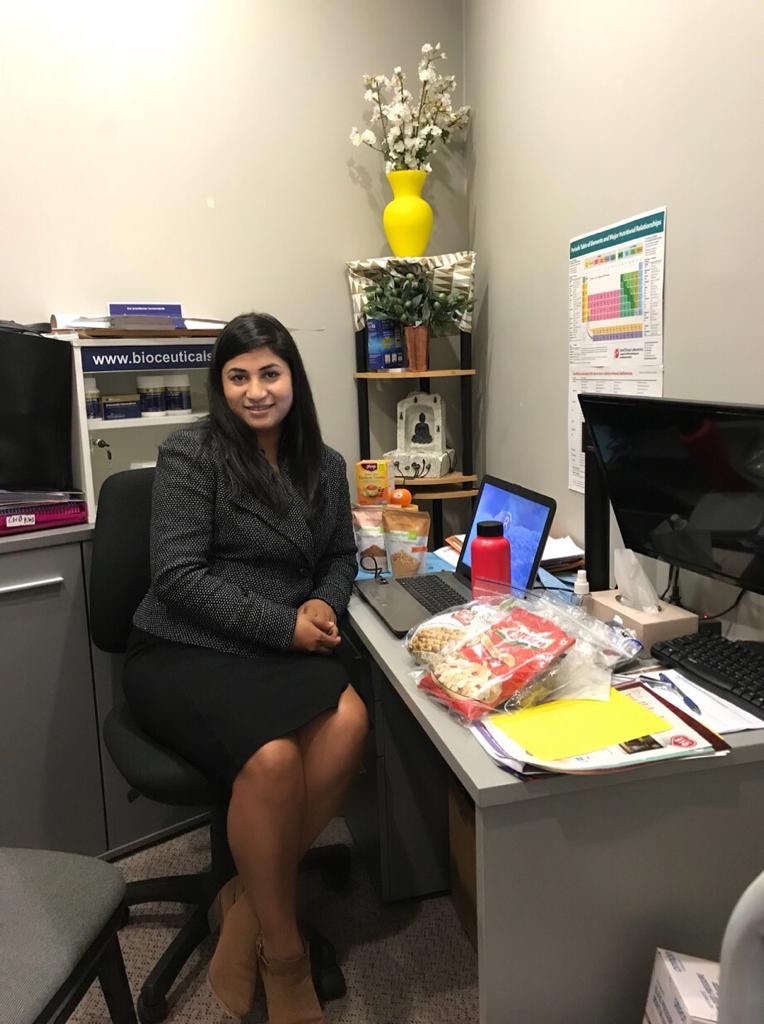
Meet our featured beauty with brains, Shilpi Shah Gupta, a nutritionist and model based in Sydney, Australia. Here is her story.
“I am Shilpi. I am a Registered Holistic Clinical Nutritionist, Entrepreneur, Blogger, Model and Mum. I have a son who is very technology advanced and hubby who has a great sense of humour. My parents are in Nepal and in-laws are in India. We relocated to Sydney in January 2019 from New Zealand.
I am from Nepal but I have always lived in India for my studies which has helped me to learn different languages and being in Boarding school since age of five has helped me to easily adopt to all places and people. I have completed Bachelor in Science from Pokhara University and then studied in Auckland Well Park College to become a registered Holistic Nutritionist (Clinical Nutrition Association) in New Zealand. Recently I have specialised in ADHD and autism from Skills Academy and also completed leadership and Management course from Barrington.
I can speak Nepali, Hindi, Bengali and lived in Darjeeling, Bangalore, Melbourne and New Zealand which was for 8 years of my life. My adventures in “healthy” eating began when I moved to New Zealand mainly because I had severe digestive problems, leg ache, body ache and fatigue throughout my childhood. I was taking quite a lot of medication which didn’t deal with the root cause. The part I really enjoyed most while studying was that we followed several diets (as part of learning) such as dairy free, sugar free, gluten free and I started healing myself naturally, I became so empowered that I felt compelled to help others. The thing I am passionate about in life is helping others to live healthier and happier. I feel I am so lucky to connect and inspire people all around the world just by implementing simple changes to feel their best. I started helping my clients during clinical practice, parents, family members and their feedback had boosted my confidence to start my business. I was running my own business which was a retail health store with clinic, where every day I was seeing many clients for their health conditions and helping them by identifying their food intolerance and providing them with nutrition consultations that made me happy when clients started feeling better. I have been practising for almost 7 years now.
Holistic Nutrition is based on integrating the physical, nutritional, environmental, emotional and spiritual components of someone’s life. I believe it has to be balanced so that your hormones are balanced and you feel greater with less mood irritability and capable to cope with life challenges, releases from craving and balancing all parts of your life work, family, relationships, children etc.
Here is an interview with her.
1. What are your main goals? Have you achieved them?
My goals as a Nutritionist is to educate clients about health by creating learning environment in order to improve their well-being. I hope to achieve this by starting a business including a consultation clinic and also keeping myself up to-date with knowledge by reading more books, articles, getting training and attending learning seminars and courses. I would like to incorporate my business which should be learning hub in health store, education relevant to their health condition and experiences, and that should provide confidence and trust to our clients. By achieving this goal, it will give me immense pleasure and satisfaction. I wish clients are educated on their health. My knowledge and experience could help them to see changes in their health. I could provide the resources and guide them what they need to do by just simple changes in their diet and also by incorporating supplements.
2. Is there any special story or experience that you would like to share?
During my Second year of Nutrition, I got a call from my dad asking that I have to come to Nepal as mum is not well. Usually I have never received that kind of call to come home urgently. I was scared and worried. I took flight next day and I was so worried and stressed out. When I reached home, I saw mum half paralysed which was diagnosed by doctor as bilateral paralysis and later on it was unilateral paralysis. She had lost the ability to breathe, swallow and move for several seconds. It looked like seizure to me. She also experienced symptoms like tremors, numbness, tingling and muscle weakness. I broke down, seeing my mum in that condition.
After looking at all the reports I was not convinced that she was diagnosed that well as first allopathy thought, stroke, bi-unit paralysis so we took her to Delhi to get second opinion and she had to go through the same process of diagnosis with MRI, Biopsy and ultrasound etc and the conclusion was she has Multiple sclerosis. It didn’t make sense to me at that time as I knew MS gets diagnosed at early age however my mum was in 50’s. The doctor prescribed her injection to be taken every month which we don’t get in Nepal so it used to come by Delhi flight every month stored in ice pack and cost of each injection was Rs, 50,000.
I wore my nutritional cap and started looking at the root cause. I knew mum’s diet and lifestyle. She has a personality of worrying and spent a lot of energy to please everyone that made her immunity weak. Healing an autoimmune condition such as Multiple sclerosis doesn’t happen overnight and there is no magic pill but it is possible to control multiple sclerosis through lifestyle changes and changing food habits and sticking with them. She had to change her lifestyle and started avoiding sugar and also avoiding food that exacerbate and consuming ones that decrease it, restoring gut flora, gut repair (leaky gut) vitamin D, B complex, vitamin C, coq10 lots of green veggies. It was a long road to travel but she now has her multiple sclerosis under control. Most of the symptoms including tremors, weakness, tingling and others gradually disappeared.
She went for another visit to doctor and they went through all the tests again. MRI showed no incurment of spot on her brain. Doctor was surprised to see it was in control and now she can stop taking all those medications which was prescribed by him.
She feels so much better that no more medication, no more side effects of those meds and now she eats healthy food and no doubt she balances that with eating junk food too.
With this experience I have learnt that following a healthy balanced diet brings so much difference in our life so we should look after ourself before it’s too late.
3. What’s your advice to women who are very busy juggling home and work and don’t have much time for health/wellness? Do you have any quick tips?
It is important to have well-balanced diet. A meal should include a carbohydrate, a protein, a fruit/vegetable and healthy fat.
• Eat three main meals and 2-3 snacks in between meals. Several small meals enable our body to process carbohydrates, fat, and protein throughout the day, supplying your brain with the steady stream of glucose it needs.
• Each meal and snack must include some protein and small amount of good fat.
• Use complex carbohydrates; Try to avoid refined carbohydrates.
Eat high protein breakfast. Never skip breakfast. Skipping breakfast will be detrimental to any attempt at stabilizing blood sugar throughout the rest of the day. Proteins are essential for growth, repair, and detoxification processes. Protein provides the building blocks for our cells and need to be replenished.
• Eat 5+ servings of fresh vegetables and fruit daily – choose lots of colour and variety to provide a wide range of vitamins, minerals, antioxidants, enzymes and phytonutrients. Eat at least 50% of your vegetables and fruit raw as cooking destroys enzymes and many vitamins
• Eat a wide variety of seasonal, whole foods – foods that are in their natural state or as close to their natural state as possible are nutrient dense and better for health (the more processed a food, the less nutritious it is). Emphasise free-range, organic, spray-free and locally grown produce as much as possible
• Choose food high in fiber, especially soluble fiber. Sources of soluble fibre include oatmeal (soaked overnight then cooked increases digestibility and reduce phytic acid content), chia seeds (also soaked in water. This makes them more digestible), seaweeds such as kelp, dulse or karengo.
• Exercise every day, Exercise helps to improve blood sugar balance.
• Read food labels – if you can’t pronounce the ingredients or if it contains a lot of E-numbers, it is highly processed and probably lacking in nutrition. This may ultimately be more toxic than nutritious for the body – why eat it?
4. What does wellness mean to you?
Wellness, the state of experiencing balance through mind-body-spirit connection. It’s holistic food for every part of yourself. There are different ways of living with wellness. Wellness for me is being in balance in emotional, physical, social, spiritual, environmental, financial, intellectual, occupational which may mean something different to each individual. It is food for the soul. Wellness means creating time for things I like to do. It is up to each of us to create harmony between our life responsibilities while finding time daily, or weekly, to participate in activities that bring us pleasure, personal fulfilment, and rejuvenation. Eating healthy and finding time to do some form of physical exercise on a routine basis creates physical balance in our bodies.
Wellness also means making time for friends and family. This is part of our emotional balance. Having a support system is important and makes us feel cared for and loved, knowing there is someone else that cares about our wellbeing. It is also a good feeling to be supportive for another person that you love and care for. It becomes an equal relationship of giving and receiving, offering equal emotional balance. When a relationship is in balance, the circle of giving and receiving is complete. When this happens, you know you have been blessed with a loving and caring person in your life that also recognizes the need for balance.
Wellness happens by making small changes that doesn’t take place within a day it adds up over time. Some of these changes can be just like eating more vegetables compared to meat or swapping coffee for green tea. Some of them can be very challenging preconceived notions about how we should think, feel, act or simply be – like letting go of negative self-talk, feeling guilty, saying YES more often than saying NO.

 Empowered Brave Women Building Futures