
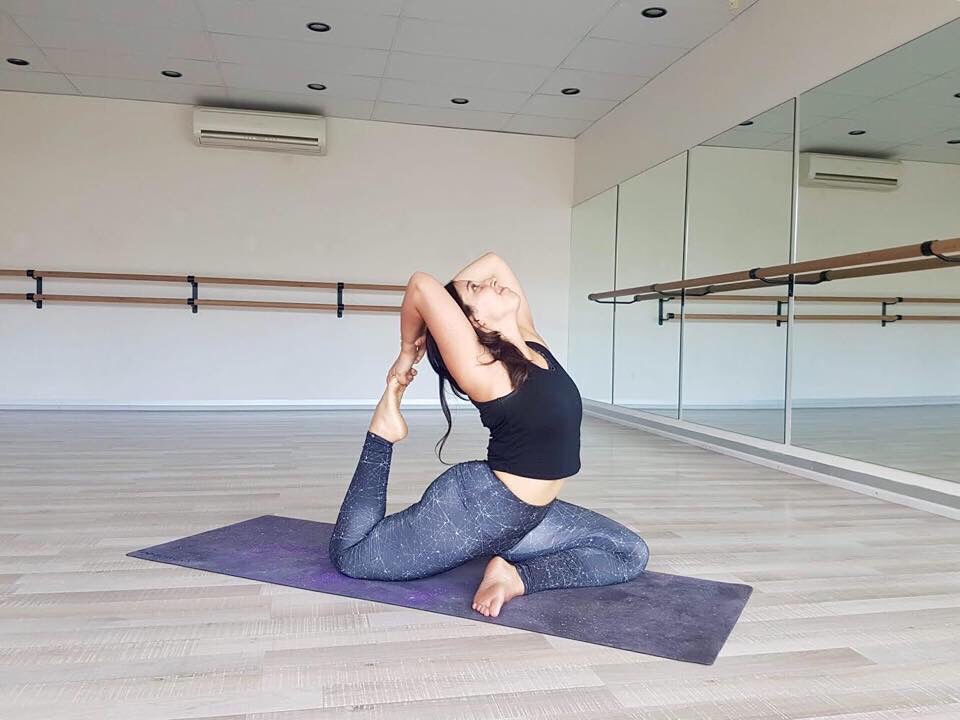
Meet our featured beauty with brains Vanessa Safajou, a yoga instructor based in Sydney, Australia. Here is an interview with her.
1. It can be intimidating to attend a yoga class for the first time. What advice would you give a first-timer?
Do a bit of research to get a better idea of what kind of class is right for you. There are SO many different classes out there and it can get a bit overwhelming; there’s Hatha, Vinyasa, Hot Flow, Ashtanga, Iyengar, Bikram, Yin, Restorative, Power; just to name a few. Once you’ve found a studio or gym you’re keen to try out, have a read of the class descriptions and choose which class or classes seem most up your alley.
Classes with words like Yin, Restorative, Gentle or Slow in the title are generally lower intensity and a good place to start if you’re looking for a more nurturing introduction to yoga. This doesn’t mean these classes are ‘boring’ or ‘easy’, but they do have a more cooling and calming energy, often with simple postures held for time and with the use of props to make you more comfortable.
Flow, Vinyasa, and most heated classes generally have a focus on flowing through movement with the breath and visiting many of the fundamental postures of yoga (think Downward Facing Dog, Plank Pose, Cobra Pose, Warrior 1 and 2, Childs Pose etc.) that help to improve overall flexibility and strength of the whole body. Even if the class isn’t heated, these classes can really build up a sweat and are a great workout, so if you’re already active and looking for a more physically challenging yoga experience this would be a great option for you.
If you’re apprehensive to go to a class by yourself, think about going with a friend, partner or family member; maybe someone who already attends yoga classes and can introduce you to their favourite teacher, or even someone who is also nervous about trying a class for the first time. Knowing that you have someone to talk to before class, lay your mat next to, and maybe have a giggle with when you see some of the weird shapes we fold our bodies into, can make you feel so much more comfortable and at ease. Speaking of comfort, make sure you go to class well hydrated, avoid eating a big meal before class (yoga really kicks the digestive system into gear) and wear clothes you can comfortably move around in.
Also, be as open as you can to trying different classes with different teachers. Just as each of our bodies has a different experience with the yoga practice, each teacher has their own unique way of guiding you through this practice. Some teachers have a more anatomical approach to their classes while others focus more on the energetic, spiritual or philosophical aspects of the practice, all of which have enormous value, but when you find a class or teacher that really resonates with you, it makes the whole experience even more enjoyable and rewarding.
2. What advice would you give to a woman who feels she doesn’t have the right kind of body to practice yoga?
I would tell her that there is no right or wrong kind of body to practice yoga, that’s one of the most beautiful things about yoga. Probably the most common thing I hear from first timers or people that are reluctant to try yoga is, “I’m too inflexible to do yoga”. As someone who only a few years ago couldn’t touch my toes, I can assure you that if you are not flexible, you should try yoga. Yoga is such a great low-impact way to build and improve flexibility and strength of the muscles, joints and connective tissues and helps to build body and self-awareness along the way. The beauty of this practice is that it’s completely unique to each person; no two bodies are the same and this is reflected in yoga. In the different stages of our lives, factors like pregnancy, childbirth, injuries and illness can make certain aspects of the yoga practice less accessible or appropriate for our bodies at that time, but it doesn’t mean that we shouldn’t be practicing yoga. As teachers, we learn the infinite ways in which we can modify and adjust postures to best fit the different body shapes, injuries and limitations we encounter in our students. Something I always encourage my students is to do is make the postures and movements fit your body, not the other way around.
Yoga is not solely a physical practice; in the Yoga Sutras (one of the most significant and renown yoga texts) Patanjali details the eight-limbed path of yoga on which physical postures (asana) make up only one of the eight limbs. There is so much more depth and benefit to the yoga practice, it helps us to connect and find a deeper awareness within ourselves emotionally and spiritually through non-physical practices like pranayama (breath control) and meditation, and if this is something you’re interested in exploring don’t be afraid to ask around for teachers or studios that offer classes that include these practices.
Finally, don’t be afraid to talk to a teacher about your worries or doubts. If you have a particular studio or teacher that you’ve been wanting to check out, you could call or stop by after a class and just have a chat. Let them know what might be holding you back, and they can advise you which classes might be more of a gentle introduction to yoga or more suitable for whatever physical limitations you may be working with.
3. What are some common incorrect assumptions about yoga?
That you need to be flexible to do yoga! This is so not true, and scares away some of the people that need yoga the most.
That yoga is boring or not challenging. It makes me really sad when people tell me they had an unenjoyable experience in a class because they found it boring or too easy. Even looking at yoga just in a physical sense (which is why a lot of people try yoga), there is so much to learn about even the most basic postures, we can never perfect a posture. Even though you may not break a sweat in classes like Yin and Restorative yoga, holding postures for long periods of time and being still can be really challenging in itself, as it gives us no choice but to be alone with our thoughts and can bring a lot of emotion and tension that we store in our bodies to the surface. There are lessons to be learned in every class whether you spend most of the time laying in Savasana or end up dripping in sweat from impressive flows and inversions, as long as we are open to them.
Again, doing a bit of research about the classes you want to attend will hopefully help you find a class that will bring you the experience you’re looking for.
4. Can yoga help in healing?
Absolutely, and in more ways than one.
Firstly, yoga is an incredible tool for healing the physical body. So many people come to yoga as a recommendation from their physio or doctor to gently reintroduce movement and to strengthen the body after childbirth, injury or illness. Yoga helps to improve flexibility, strength and mobility of the muscles, joints and connective tissues of the body which not only helps the body repair itself, but also helps to prevent further or new damage.
Yoga helps to unite body and mind, enabling a deeper connection with oneself. Many people find that their yoga practice has improved their body awareness; knowing when to push for a little bit more and, more importantly, when to pull away from intensity and be more gentle. Yoga can also do wonders for our mental health, with pranayama (breath control) and meditation practices being an excellent tool for those dealing with depression and anxiety. It seems like something so simple, but being able to breathe steadily and deeply, especially in moments of stress or discomfort, is an invaluable tool.
Finally, yoga helps to improve the relationship we have with ourselves and minimise the negative self-talk that can unfortunately dominate our internal dialogue. The more we get to explore our physical, mental, emotional and spiritual states we get a deeper understanding of the way we feel and process our emotions and experiences, and move towards finding acceptance and contentment within ourselves.
 Business With Balance