
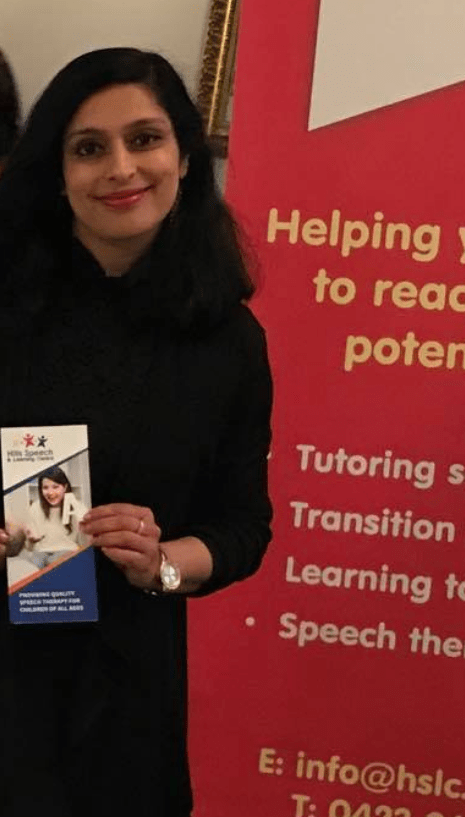
Meet our featured beauty with brains Sonia Sethi Gugnani, a speech pathologist based in Sydney, Australia. Here is her story:
“Hi, I’m Sonia, mother of two beautiful girls and wife of a very caring and supportive husband. I get all my strength and energy from my family. I have been working as a speech pathologist for over 15 years in New Zealand and Australia, and recently I’ve opened my own tutoring and speech pathology services in Epping. I’m Indian by background but moved overseas almost 17 years ago—that being said, I’m very much in touch with my culture and the Indian community in Sydney. In my spare time, you can find me cooking up a storm or going out for nice walks in nature.
I graduated with an honours degree in psychology and later went on to attain my masters in speech pathology. Over my career, I’ve worked extensively with children of all ages and abilities, and in various settings, predominantly in not-for-profit centres, but also in private practices and recently my own clinic. I’m also a public speaker and have run a number of workshops, webinars and seminars.
I opened my clinic with a vision: to empower children and their families to strive for excellence and reach their potential, their personal goals, and discover their strengths. To me, education is about enjoying a life-long experience of formal and informal learning.”
We asked her some questions on speech, language and communication.
1. According to you, what are the major
causes of speech problems in children?
There is often no one cause! Speech problems are multifaceted and arise as a combination of many different factors. Children develop at different paces and quite often what appears to be a speech problem is just a child being a late talker—although if you’re concerned, definitely speak to a speech pathologist and get it checked out. Some common reasons children may have speech delays or difficulties can include limited exposure to language during early development, selective mutism, bilingualism/multilingualism, dyspraxia (motor planning difficulties), underlying syndromes and disabilities. If you’re concerned about your child’s speech development relative to their age, feel free to check out this link. http://www.hillsspeechlearningcentre.com.au/speech-pathology/ages-and-stages/
2. Is there a difference between speech, language and communication?
There’s a bit of a difference, but they all go hand in hand. Communication is not just words, but includes all the other non-verbal ways in which we get our message across e.g. signs, gestures, facial expressions, visuals etc. Speech is the way in which sounds are articulated and is a complex process involving many regions of the brain, throat, mouth and oral muscles. Language is a way of expression through words, phrases and sentences.
3. What are the best ways to encourage a child’s language development?
Communicate! Talking to your child, spending time with them, exposing them to different words, sounds, gestures and books all are proven strategies to help them with their language. Follow your child’s lead and interests to model language through day-to-day routine activities. Children learn best through spaced repetition and songs.
4. Can speech/language problems be prevented?
To a very large extent, yes. First and foremost, make sure your child’s hearing is tested from a young age. If you’re ever in doubt about your child’s language development, do see a professional (e.g. speech pathologist, or GP who can refer you to one) to get a proper assessment of your child’s communication skills. Early intervention solves a lot of problems or more importantly, prevents them from happening. The good news is that you don’t have to spend a lot of money. GP care plans, your health insurance and NDIS can all help out.
 Business With Balance